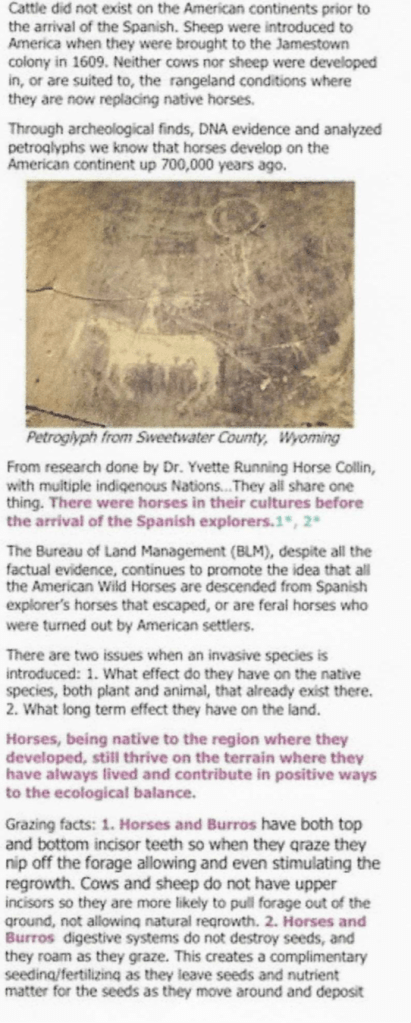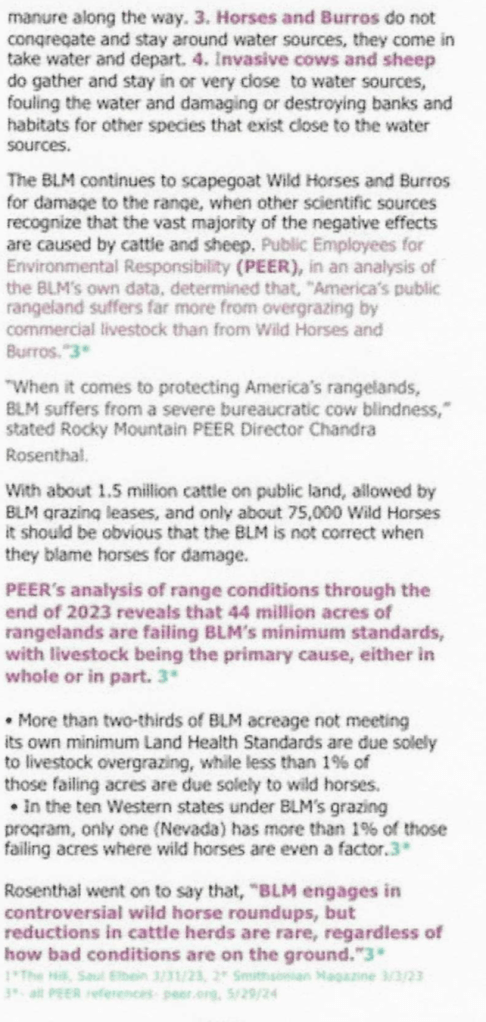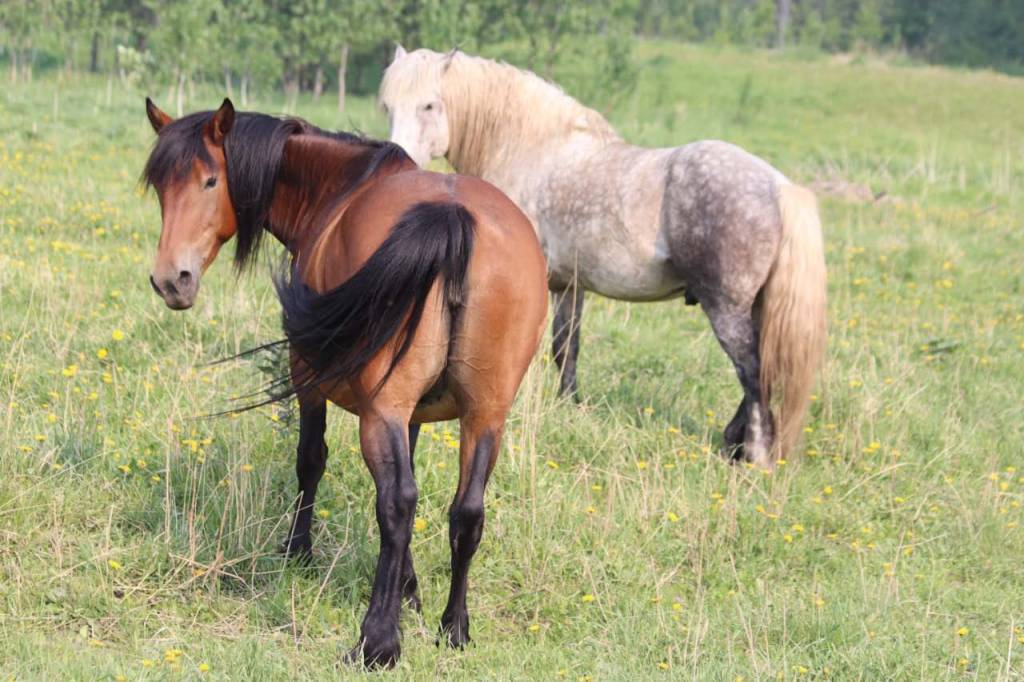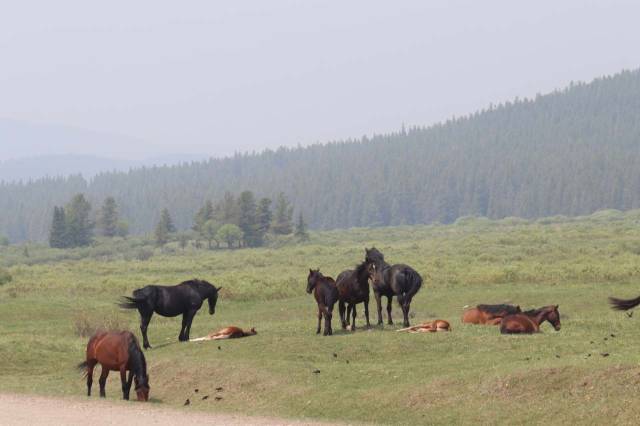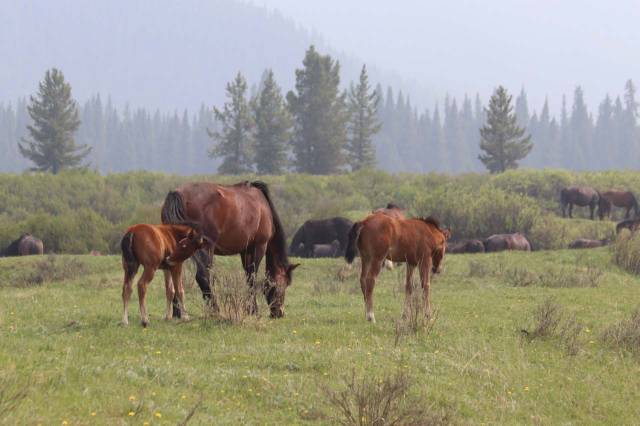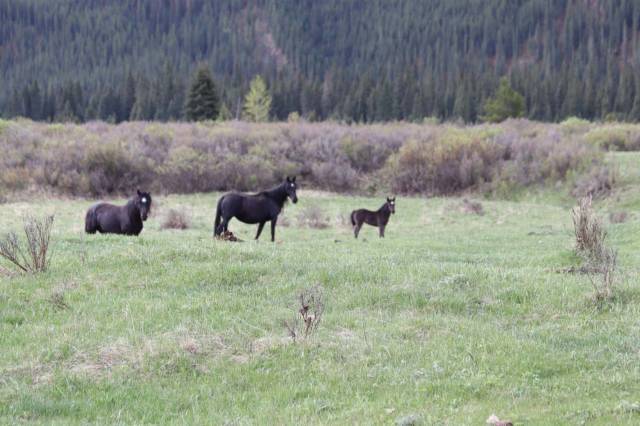
Trouble Is Brewing In Wild Horse Country

We would like to acknowledge that the Alberta Mountain Horses inhabit the traditional lands of the Stoney lyethkabi, (mountain) people.
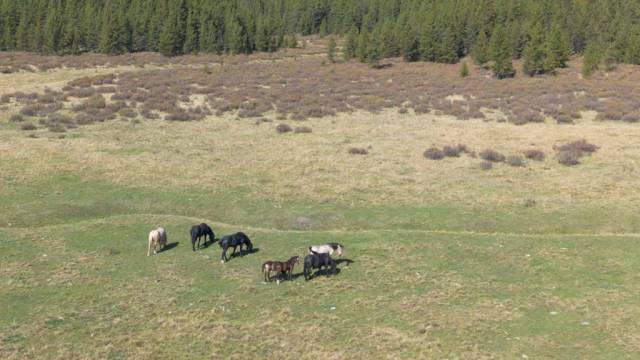
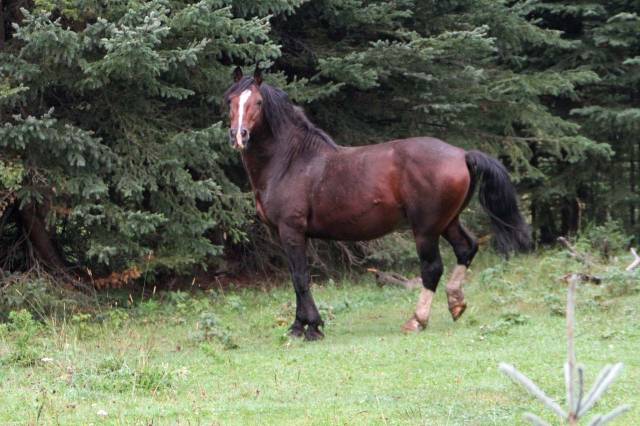
The Alberta Mountain Horse Preservation Society is dedicated to the preservation of the wild Alberta horses. This preservation would allow them to continue to roam free & wild for all future generations, in their natural environment located throughout Alberta’s foothills & mountains.  I have been a wild horse advocate for decades and was naturally very troubled when the current President of WHOAS, Jack Nichol, announced that we should stay tuned for a big announcement in January of 2026, that they were to begin a rescue management program (The Albertan, Sept 27, 2025).
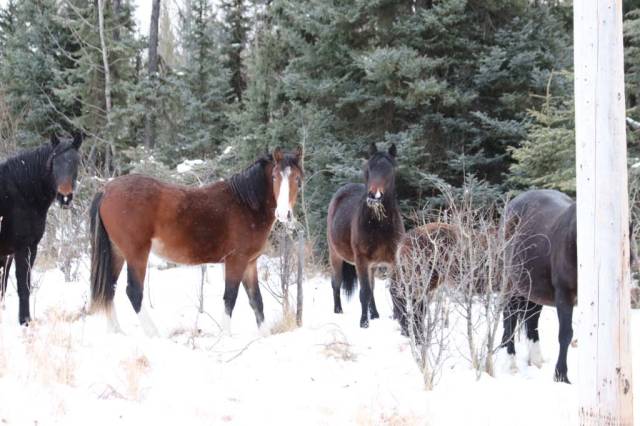
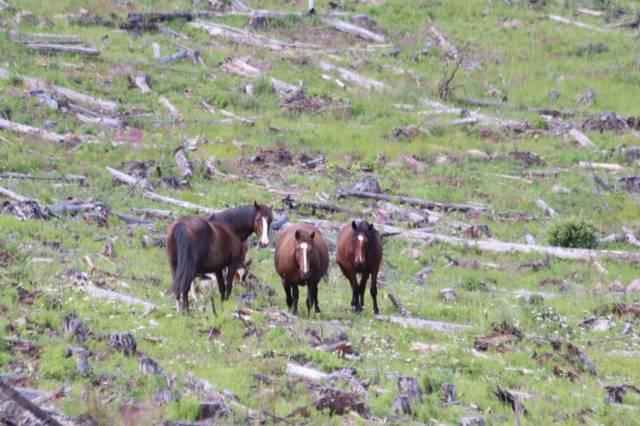
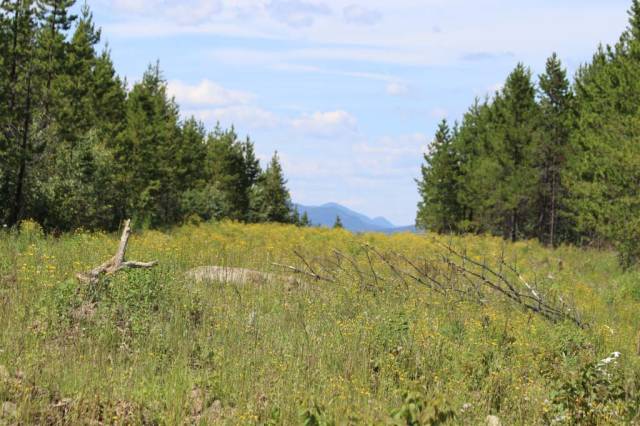
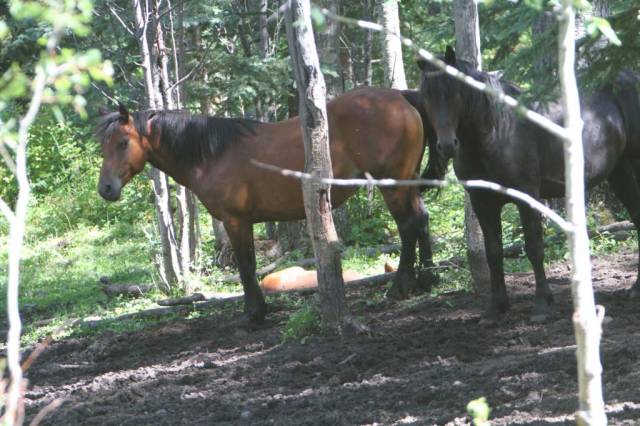
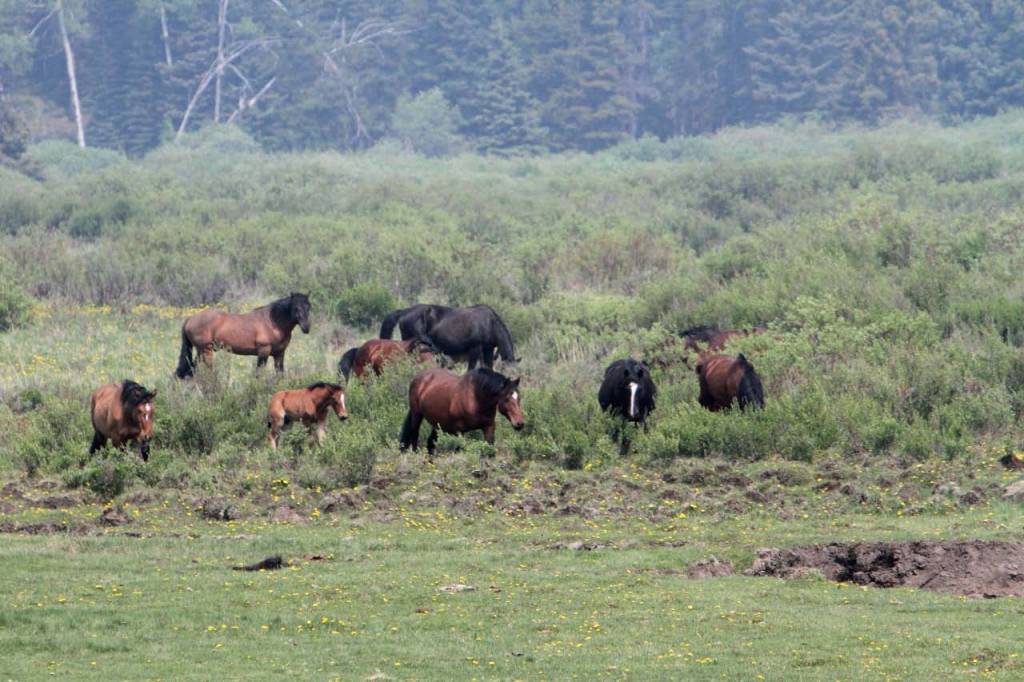
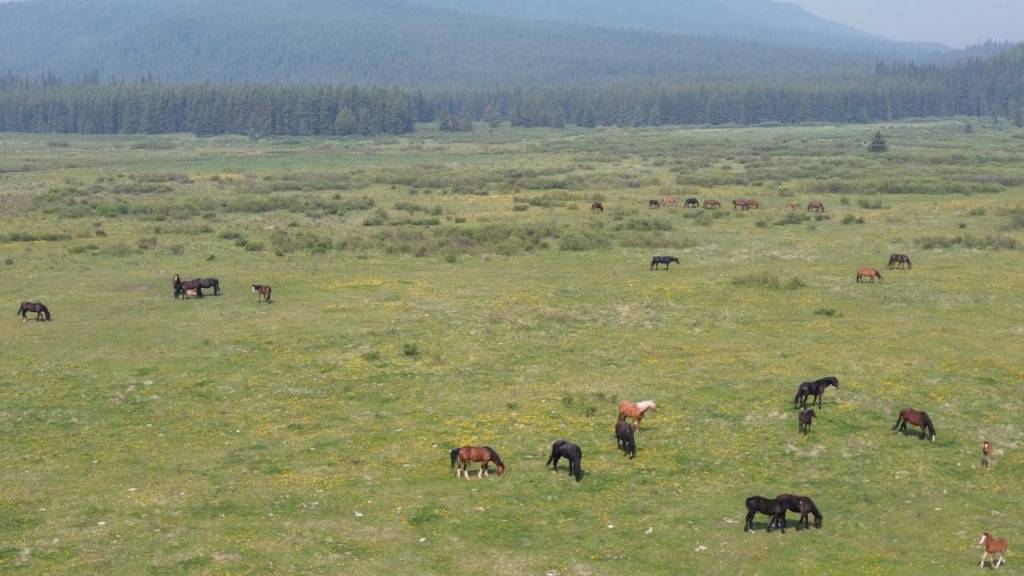
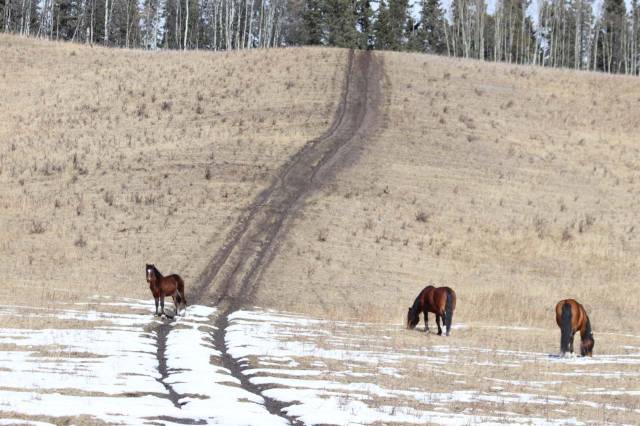
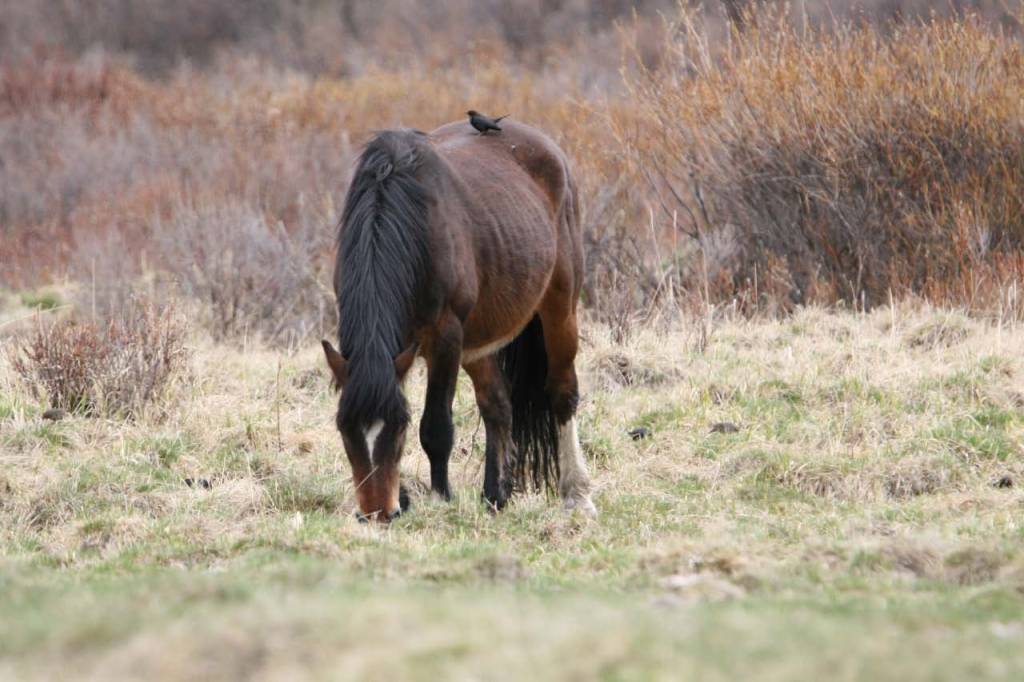
No cattle grazing in this area & plenty to eat for the winter

Most of us are now aware that the current WHOAS Board of Directors and the Alberta government have signed a Memorandum of Understanding (MOU), allowing not only for the capture and removal of horses from designated Equine Zones, but also for delivery of a contraception vaccine to a large number of wild horse mares.  We outlined all of our concerns in a previous post “Turmoil in Alberta Mountain Horse Country” March 20, 2025.  It now appears that this program will begin in 2026.  This is quite simply wrong, and it is completely uncalled for. Despite all the reputable evidence to prove how unnecessary a cull is, it looks like it will begin.
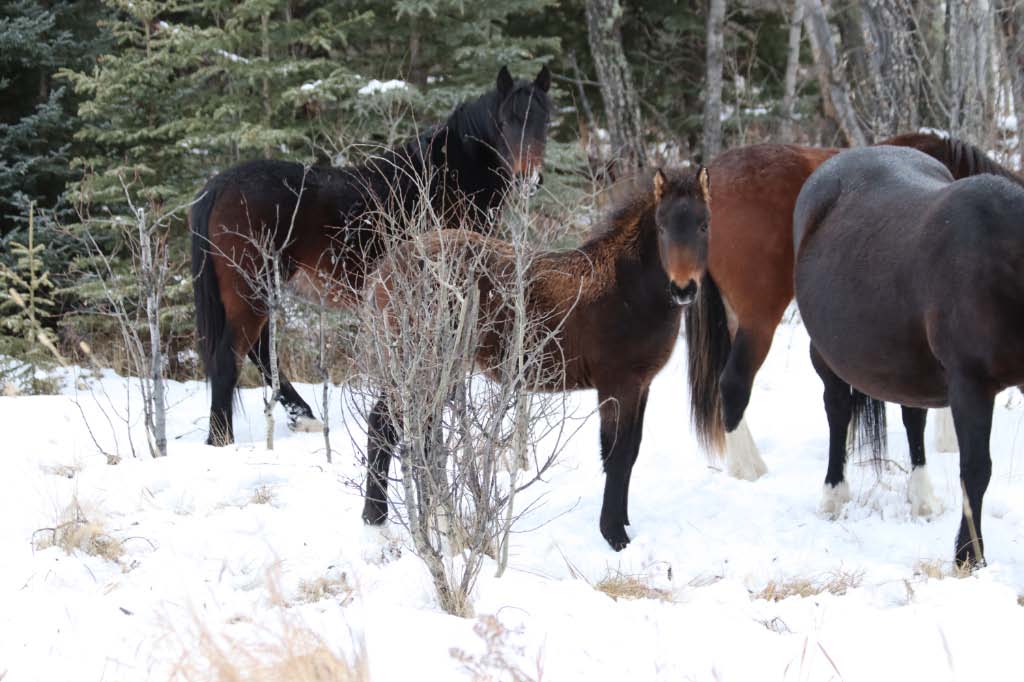
The MOU states that WHOAS will undertake and operate an adoption program.  That said, it is an undisputed fact that there are several wild horses already in WHOAS pens at their facility west of Sundre. Some of those horses have been there for well over a year, some on their website have in fact been living in pens there for several years.  If they capture another 20 horses this upcoming year, in accordance with the MOU, what will happen to the new captures? Where will they all be housed if the pens are already full? How long will they be left penned up?

The MOU lists WHOAS as being responsible for the actual setting up of capture pens to remove horses in the designated geographic areas.  This action alone goes against everything WHOAS was originally organized for, which was to ensure the freedom of Alberta’s wild horses.  The MOU between WHOAS and the Government also states that the capture of horses can also be undertaken outside the time frame for the Alberta Horse Capture Regulations, November 1 – March 1.  To add to this conundrum, we have become aware that rather than just gentling and halter training the horses for adoption, WHOAS is now training these horses with the intention of then selling them for thousands of dollars. Case in point, a horse used in the previous Trainer’s Challenge in August 2024 is still living in pens at WHOAS and they are asking $4,000-$5,000 for him. This is NOT an adoption program. This seems more like a “for profit” business enterprise, and our fear is that the latest agreement with the government to capture and remove even more horses, will feed what we believe has become a hunger for profit, which will be filled through the eventual demise of Alberta’s wild horse population.
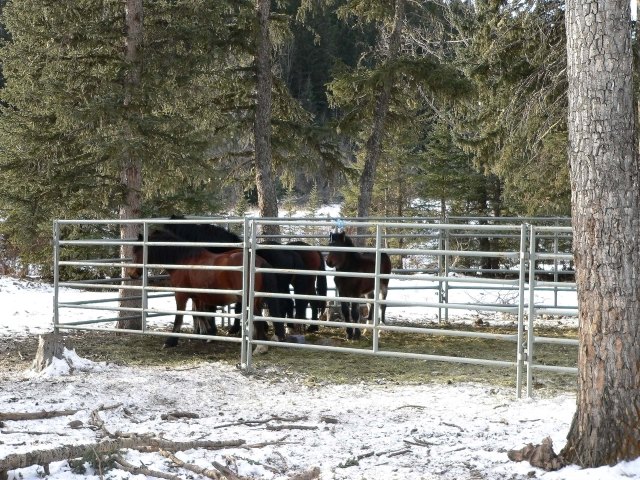
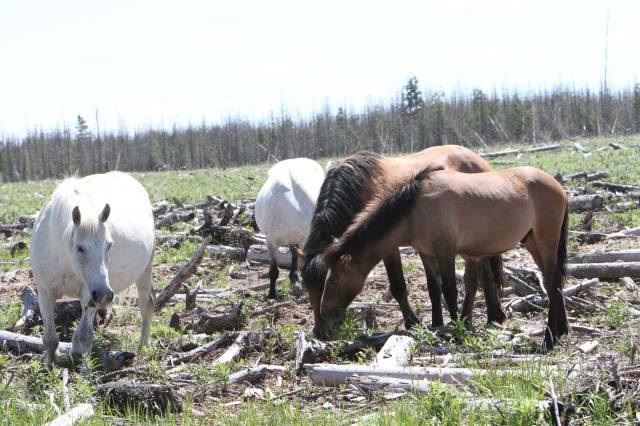
Wild horses in capture pen from previous years – they are gone forever

The second part of the MOU deals with the use of an experimental contraception vaccine on the wild horses.  The agreement reads in Item 2 (b): “To support the Fertility Control Project, the Department intends to issue to WHOAS, at its sole discretion, licenses as may be required to capture, treat and release up to a specified number of Horses in an identified geographic area, for fertility control.”   They will also receive grant money to assist in this attack on our wild horses.

“The SpayVac PZP vaccine is not fully licenced for general use in Canada. It can only be accessed through an experimental permitting process from Health Canada for specific field trials or research projects.”

The vaccine has not been approved for use in Canada and is still in trials on other horses and wildlife both here in Canada and in the US! From what we understand this part of the MOU will be enabled through the University of Calgary’s Veterinary Program.

The biggest thing wrong with all of this and the issue of the MOU with WHOAS is that it is all totally uncalled for and unnecessary.  There has not been a cull since 2015 and the population of the horses has stayed relatively stable.  In some Equine Zones, the government’s aerial surveys one year will show an increase and then in the next a decrease in the overall number of horses counted in that zone. 

For example;

  • From the government counts in the Clearwater Equine zone in 2024, 156 horses were counted and it was stated after that count that the number had to be reduced.  But in 2025, only 77 horses were counted in the exact same area. With no reduction efforts carried out.
  • In the Ghost Equine zone, the 2024 count saw 372 horses, but in 2025, 462 horses were counted and therefore, according to the government, the numbers need to be drastically reduced.

Is it just me or do you see something wrong here? An important note, specifically with the Ghost Equine Zone, is that there is a large Stoney First Nation Reserve, #1428, and the people of that band also have horses roaming free within that zone.  So, in the government’s zealous drive to remove horses, might they have included native owned horses in their aerial count?

The entire premise for coming up with this threshold number for each of the zone comes from the Feral Horse Management Framework.  The government states that these thresholds were derived and approved by all stakeholders in the FHAC.  That is a lie because I know that the horse advocacy groups really questioned where these threshold numbers came from.  They certainly did not come from science! 
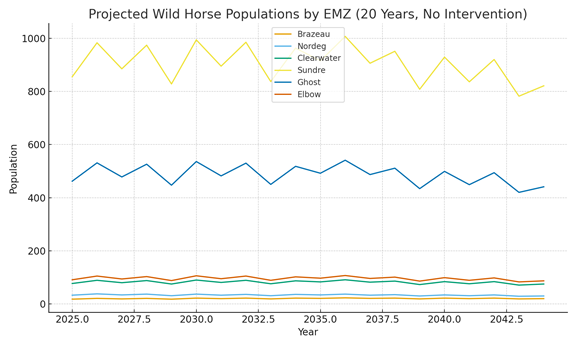
In another post on our page, “Clarification Of Some Points” dated Sept 17, 2025, we showed a graph showing that without intervention the horse populations are predicted to stay fairly stable, with some increases but also some decreases throughout the years.  It also shows that with administration of the contraception vaccine a very sharp decline in overall population of Alberta Mountain Horses is likely to occur.  This point was brought up at a FHAC meeting, which we were not invited to attend. Another advocacy group present at that meeting was not given the opportunity to bring this point up, most likely because the government cannot defend it. The same group stated in their release that this was “Equine Genocide”. We do get a sense for why the government will not hear the science behind the horse populations though. In the MOU, it refers to the effect the “horses” have on the ecosystem. This is basically what the framework says about this: “Ecosystem Impact: Addresses potential negative effects on wildlife and rangeland health, emphasizing the need for sustainable management practices.”
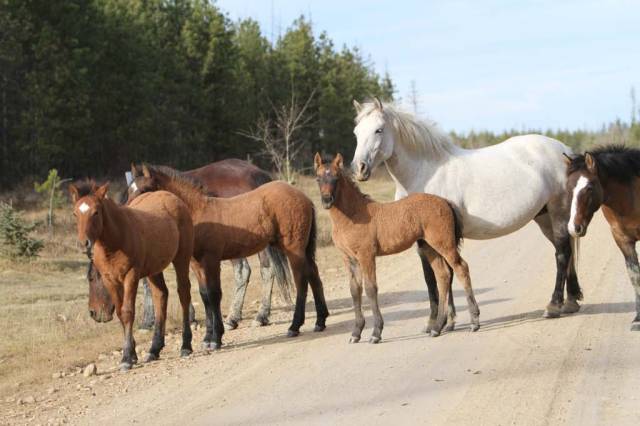
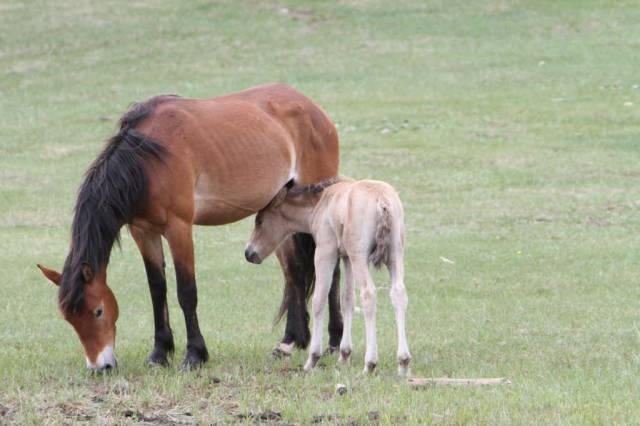
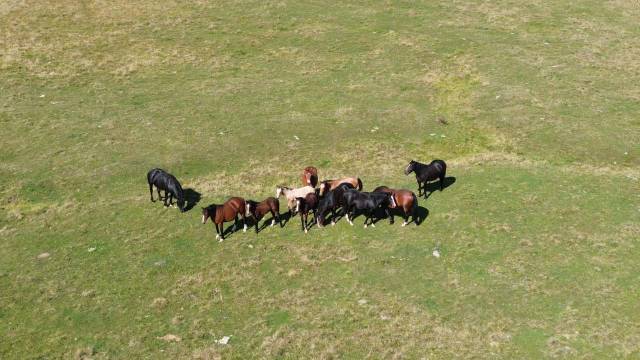
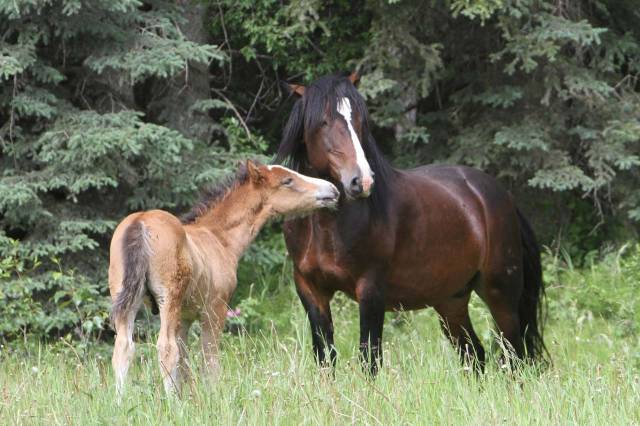
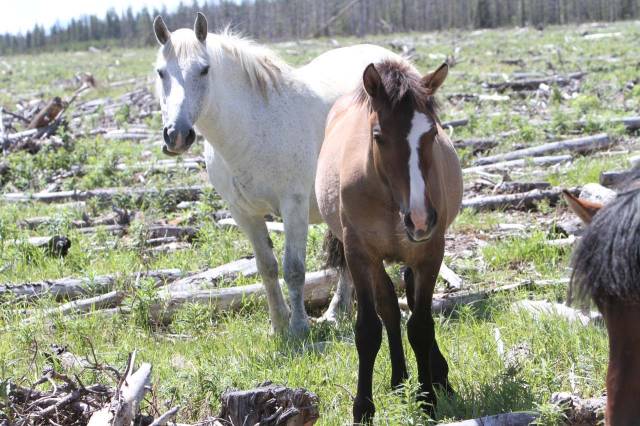
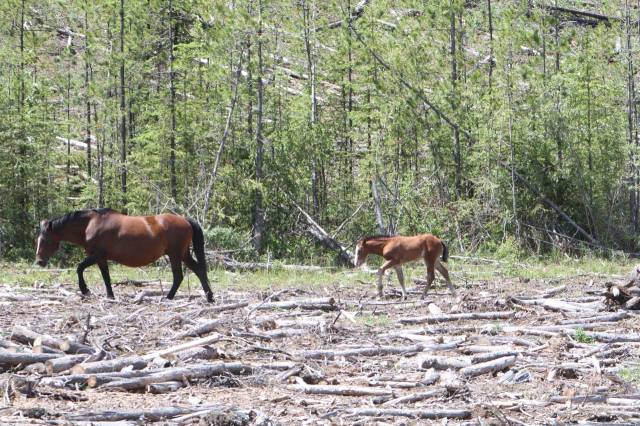
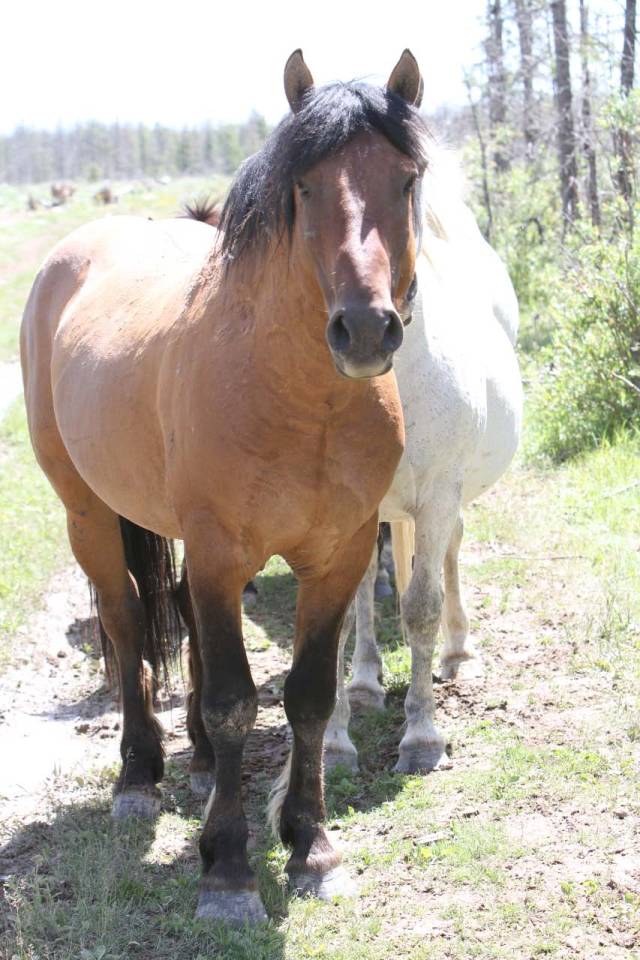
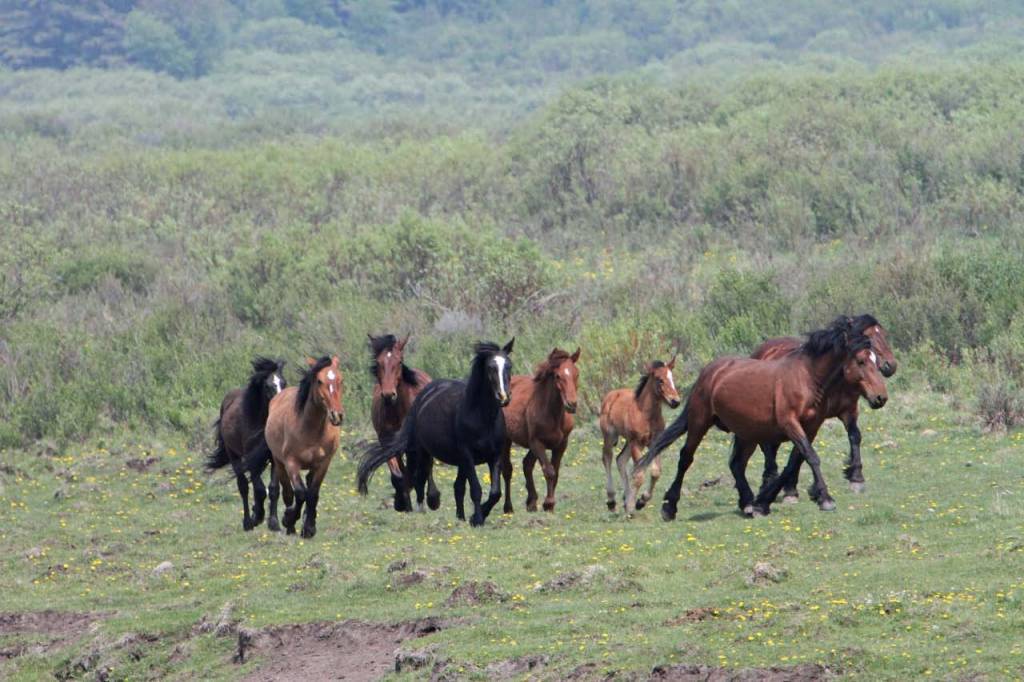
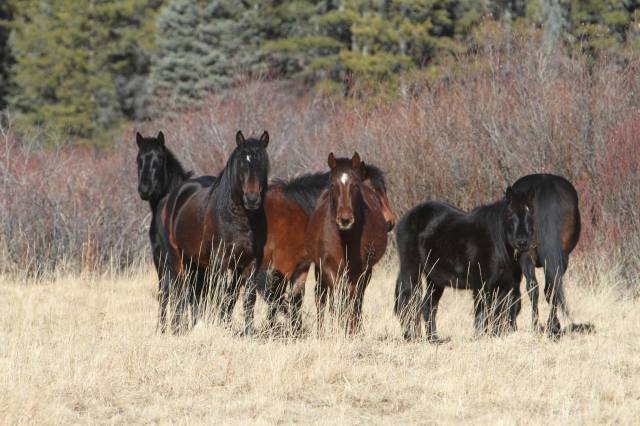
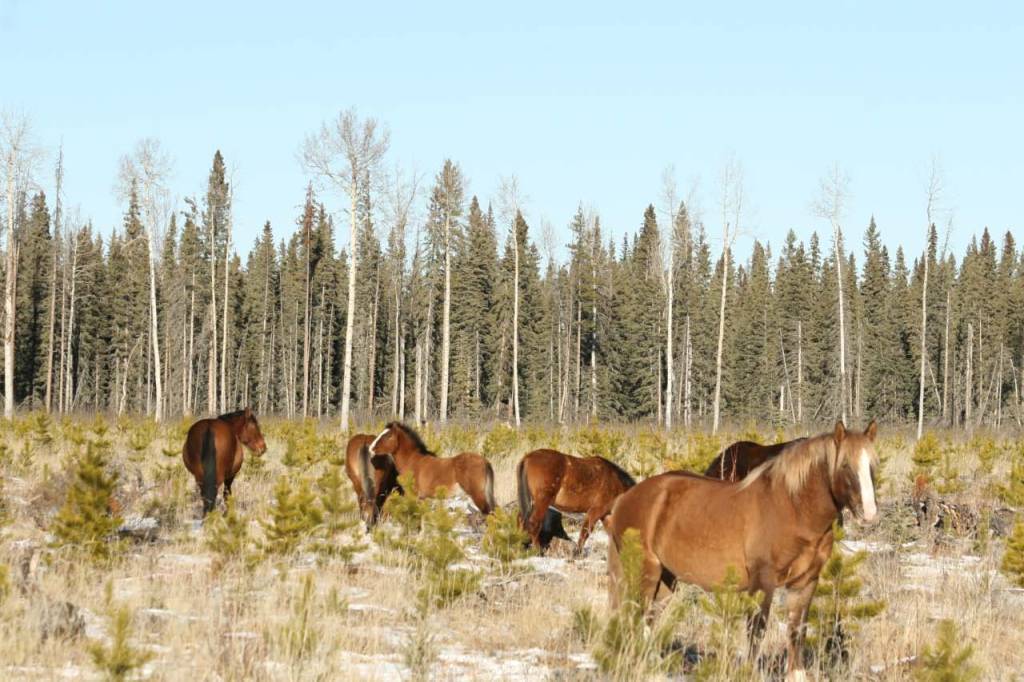
Will we ever see a family like this again?
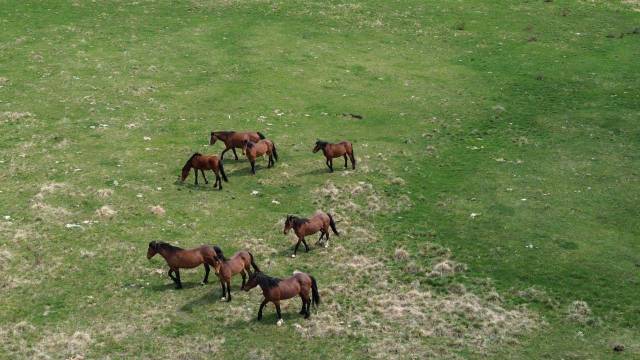
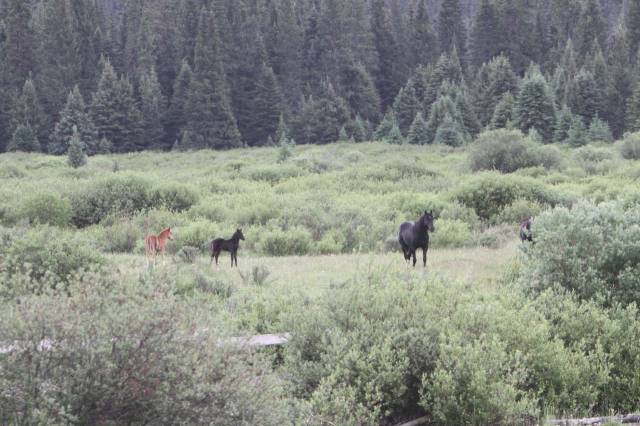
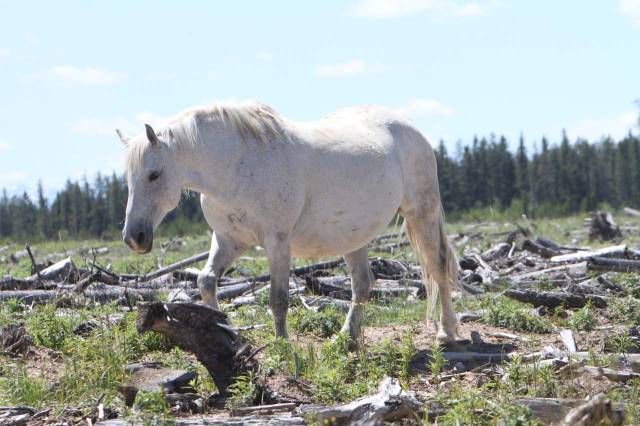
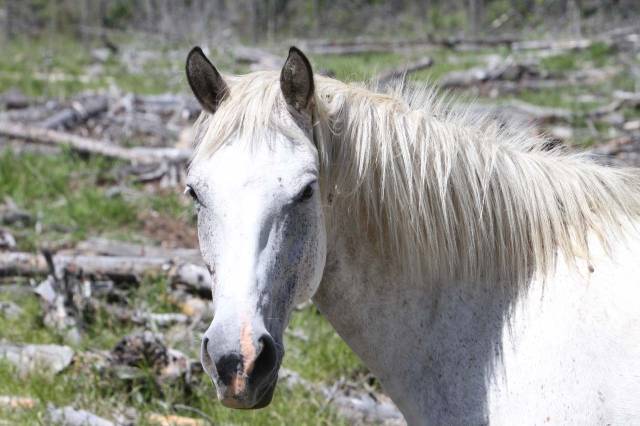
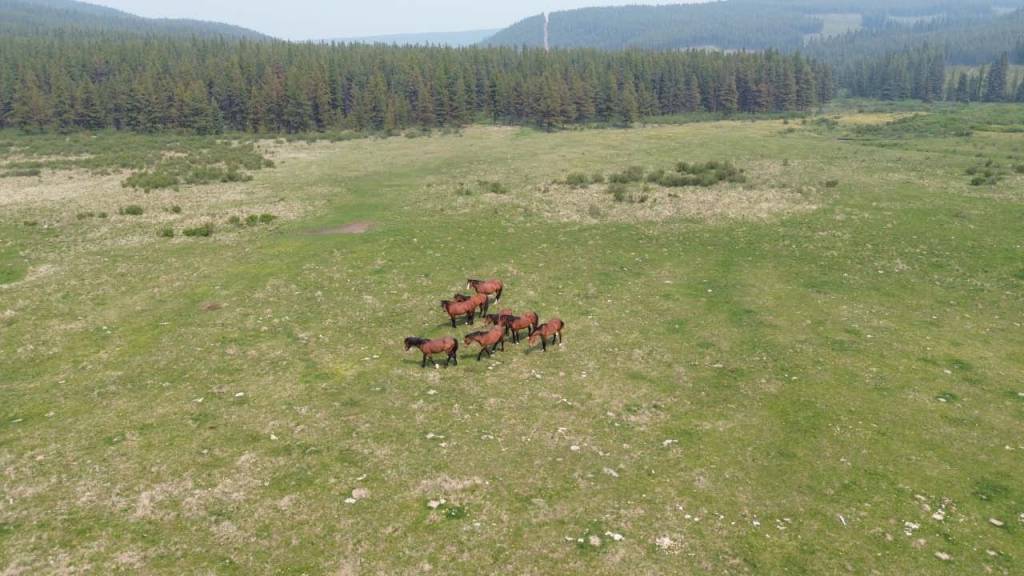
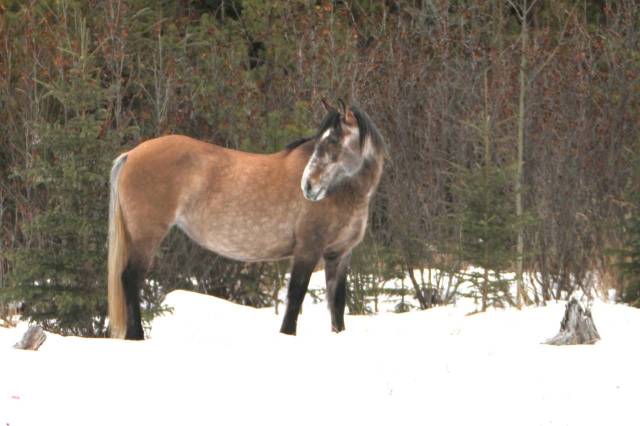
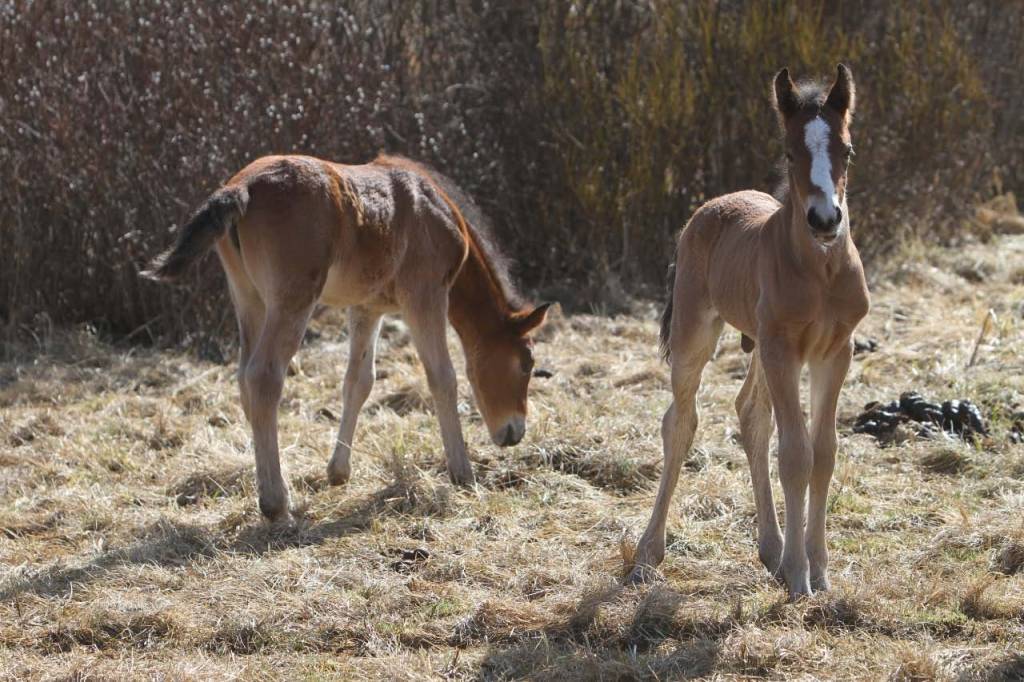
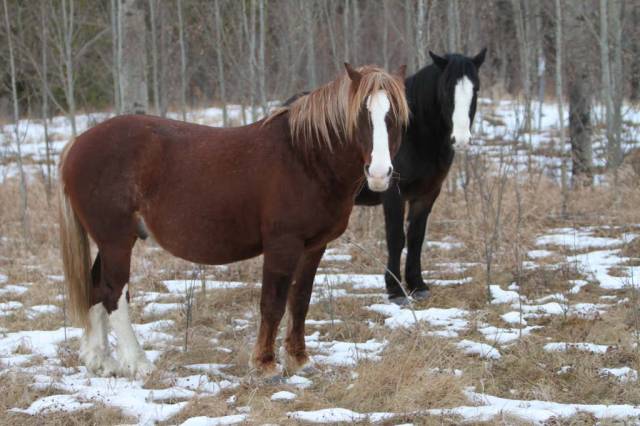
This too could be gone.

The government blames the horses for all the damage to the west country and refuses to look at the true cause of the degradation of the range and ecosystems, which is a combination of the overgrazing of cattle, logging activity, industrial use and all of the other environmental factors that come into play in today’s world. Who will they blame when they have succeeded in removing all the horses and the ecosystem is still failing, I wonder?
In closing we ask ourselves: How can WHOAS, who’s mission statement is to keep the wild horses wild and who are a registered not-for-profit charity, take money from the government to reduce the number of horses in the wild, especially when there is no need? This was never the original intent of this society when it was set up over twenty years ago. As the original founder of the Wild Horses of Alberta Society, this is a fact I would know better than anyone. And as the original founder of the Wild Horses of Alberta Society, no one is more disappointed in the direction they are taking.
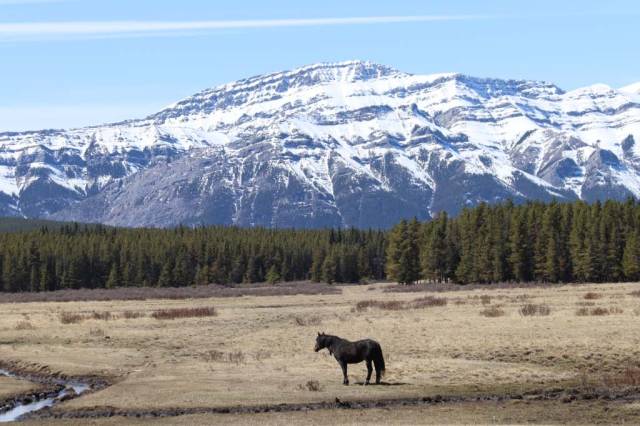
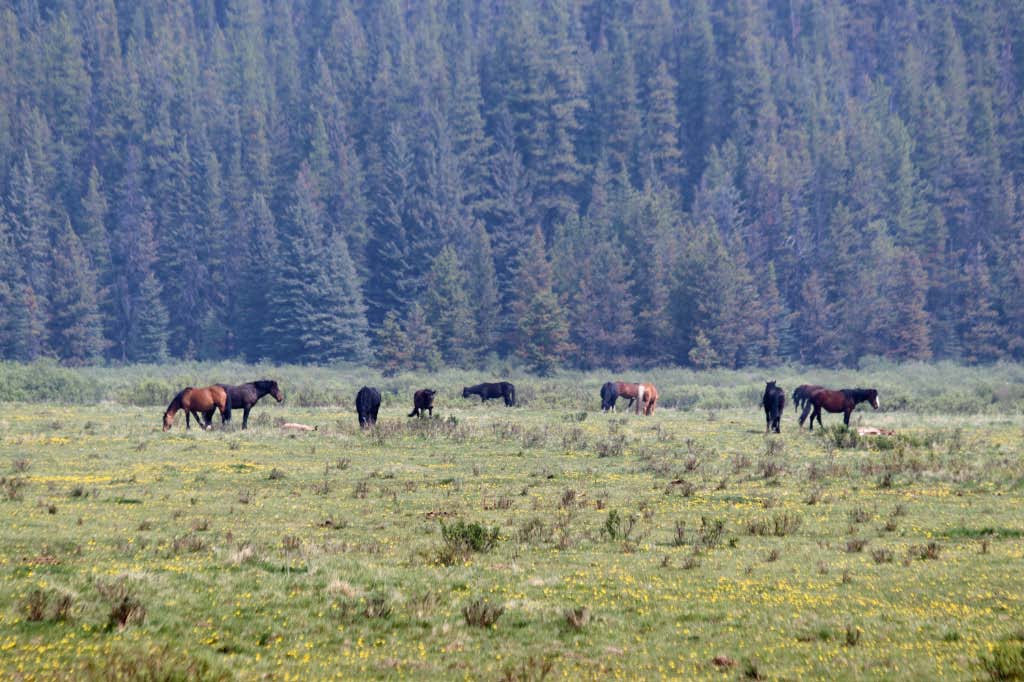
A Distinct Identity

We would like to acknowledge that the Alberta Mountain Horses inhabit the traditional lands of the Stoney lyethkabi, (mountain) people.

We believe strongly that in order to get our beautiful Alberta Mountain Horses better protection and to have them managed properly, that it is time to have them recognized as a distinct and unique species. They are classified now under government regulations and ideologies as an invasive feral animal. This is so wrong and shows the complete lack of insight by government departments and those groups who want the horses gone, as to how these wild horses came to be on our Alberta landscape. They continue to refuse to listen to science and native oral history about the horse, how it arrived in this part of Canada.

As we have pointed out in the past, DNA research done by a University of Calgary genetic researcher and also by one out of the University of Texas, shows that the Alberta Mountain Horses are indeed unique to Alberta having evolved into their own distinct species, just like the Canadian horse.

According to a research paper submitted by A. Kincaid, North America is recognized as the cradle of all the original bloodlines of horses that have populated the rest of the world. This makes the case that horses were at one time “native” species to this continent. By having the wild horses given a distinct identity to afford them protection and inclusion, then research and science could contribute to this effort and thus it could be submitted to the Committee on the Status of Endangered Wildlife in Canada, (COSEWIC). This committee recommends species to the Species at Risk Act and they deem a species wild if it is native and has persisted in Canada for more than 50 years. It is threatened if a 10% decline in population over 100 years occurs. With the current plans being considered by the government and based on the criteria of COSEWIC, the Alberta Mountain Horses are wild and threatened. Definitely a change in policy is needed.

In a recent post on her FB page Deb (De Dutch) posted an interesting one called “What’s in a name? More than you think.) with her permission, I am posting it here for all to read. It definitely points out everything that we have been saying surrounding the closeminded attitude of government officials toward these magnificent horses .

“Feral?

What’s in a name? More than you think.

Words have power. They influence our emotions, color our perceptions, spur us to action or weigh us down with despair. A single word can bring an entire story to mind.

For centuries the free roaming horses of the Alberta foothills have been labelled as ‘feral’. Nothing more than recently escaped domestic horses

DNA testing by Dr Gus Cothran confirms they trace their ancestry to the Canadian horse, the Spanish Iberian and Indian ponies.

The Canadian horse is a light draft breed developed in the province of Quebec and brought over to Alberta for logging and mining. The Spanish Iberian was introduced to the America’s by the early explorers. The presence of both these domestic breeds in the bloodlines of our Wildies would seem to support the theory that some of them escaped or were released. However, that was more than 400 years ago.
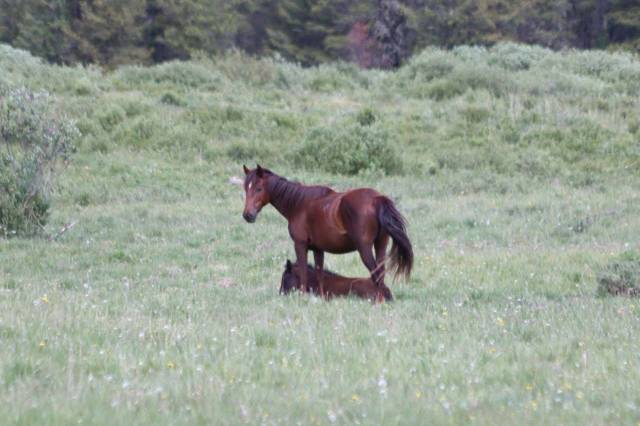
The presence of Indian pony bloodlines presents a different picture. According to Nakoda Indigenous knowledge keeper Barry Wesley, whom I interviewed, the horse was always here. He referred to the theory that horses went extinct on the North American continent after the ice age, as the ‘white man’s story’.

Dr. Claudia Noetzke, world renowned wild horse expert stated that archeological evidence which supports the Indigenous claim, has been suppressed.

Dr. Gus Cothran, who performed the DNA testing, found these horses bred true, indicating they had become a breed unique to Alberta.

Why do names, labels or classifications matter?

If horses never went extinct, they would be classified as a native species, which means they would have legislated protections in place.

If they did go extinct, they would be classified as a reintroduced native species, brought back by European explorers. This classification would also come with legislated protection.

Alberta Wildies, meet the Canadian federal government definition for a naturalized species, which the Sable Island horses fall under. A naturalized species has lived in the wild, free from human intervention for more than 50 years. Alberta Mountain horses have lived wild for more than 400 years. This classification comes with legislated protections.

One reason they are not presently classified as a naturalized species is because they do not reside in a federally protected national park. Therefore, they fall under provincial, not federal jurisdiction. If the horses crossed over into the YaHaTinda, Banff or Jasper parks, they would fall under federal jurisdiction.

Feral species fall under the stray animal act with weak and little to no protection.

The biggest issue with the word feral is in how the wild horse antagonists and the provincial government wield it. These same people often use the word feral interchangeably with the term invasive species( another slur which is also scientifically inaccurate). They use it as a weapon in the same manner an abuser uses a slur to objectify his victim. Turning a living creature into an object allows the abuser to justify his abuse and derogate his victim more easily.

The provincial government and wild horse antagonists are reluctant to let go of the derogatory term feral. A slur the Alberta government used in the last century to pay ‘Mustangers’ for the severed poll scalps and ears of ‘feral’ stallions, mares and even foals.

The provincial government and wild horse antagonists still wield the term feral as a weapon to justify the removal and sterilization of a vulnerable, minority population of horses into extinction.

This is why wild horse advocates do not use the term feral and are fighting to have the horses reclassified to their scientifically correct designation as a legislatively protected naturalized species.”

Right now we are researching the difference between an animal being designated as (1) a “naturalized” or (2) “re-introduced” species. In regards to naturalization, it involves the species surviving in a new environment and reproducing independently of human help. Further it integrates into the ecosystem, sometimes so thoroughly it becomes difficult to distinguish whether it is native or introduced, i.e., definitely our wild horses.

The definition of a “re-introduced” species: The species was once native to a particular area (all horses originated in North America); disappeared or became locally extinct in that area and has been returned to the wild in that same area. Whether this reintroduction was done accidently is not really a factor. According to some ongoing current research information has come to light to show that the horses really never did become extinct in North America. As noted above according to our First Nations people, this is just the “white man’s story.”

There is a lot more to be done in order to achieve having our Alberta Mountain Horses redesignated and protected, but we are dedicated trying to achieve this goal. This is hard as we have to overcome the negativity and close-minded attitudes of our government. Wish us luck!

Remembrance Day -Lest We Forget

We would like to acknowledge that the Alberta Mountain Horses inhabit the traditional lands of the Stoney lyethkabi, (mountain) people.

Every year we take time on November 11 to mark a somber occasion and take time to remember our brave men and women who have fought and died for the freedom that we have in this country. We must also remember and say thank you to all those that still serve in armed forces to protect our freedom, even today.

We also strongly believe in taking the time to reflect on all the animals that have died in all of these conflicts trying to serve us and protect us.

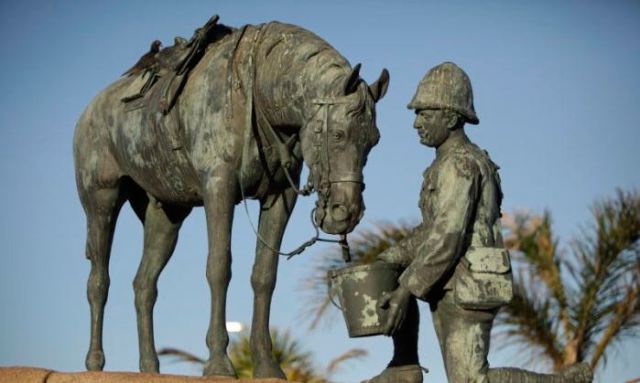
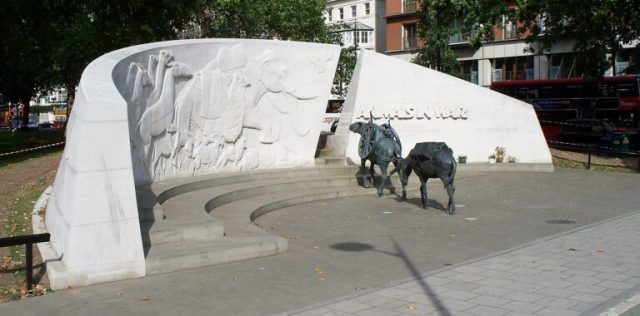
War Memorials paying tribute to the sacrifices of horses.

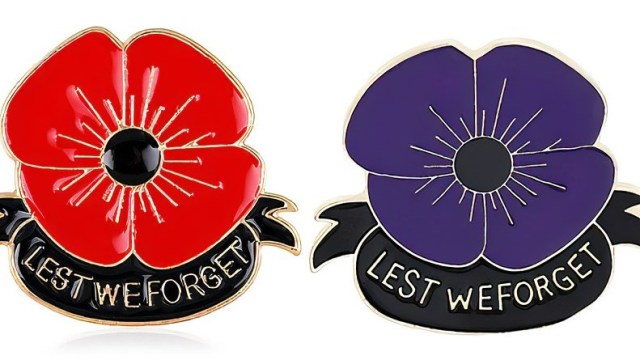
The red poppy signifies our respect for our veterans who sacrificed their lives for our country and the purple poppy signifies our gratitude for all the animals that have served us in our fight for freedom.

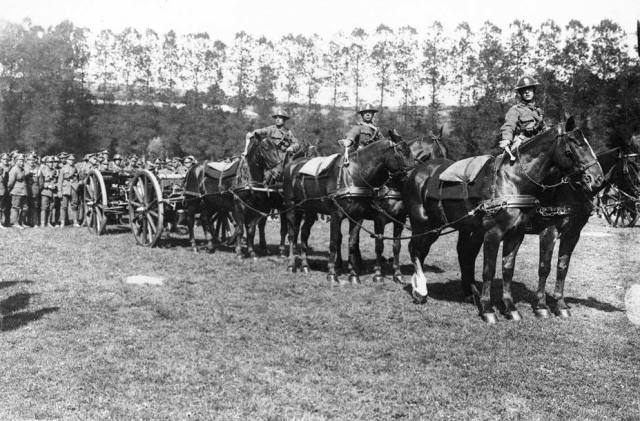
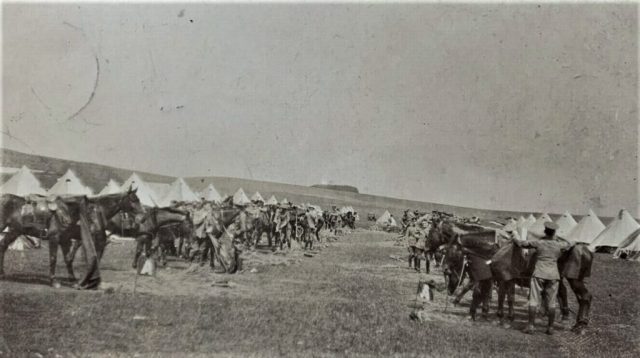
Some of the Alberta Mountain Horses roaming free and wild in our Alberta foothills and mountains are direct descendants of horses that were rounded up and sent overseas to be used in World War I. 480,000 horses died in World War 1 (WWI), three-quarters of them from the extreme conditions they worked in. At the start of the war, the British Army had 25,000 horses. Another 115,000 were purchased compulsorily under the Horse Mobilization Scheme. Over the course of the war, between 500 and 1,000 horses were shipped to Europe every day. Canada sent about 130,000 horses overseas during WWI. By the end of the war, Canada had provided well over 10 per cent of the horses used on the Western Front.

Although many horses were taken from farms and ranches hundreds of others were wild horses that were rounded up by government wranglers in areas around the Red Deer River and YaHa Tinda. Glenbow archives records shows pictures of these roundups.

Besides the horses used in battle, there were dogs, donkeys, mules and birds that were part of the war and tried to help us in our fight for freedom. Millions of animals died in the war due to shelling, poisonous gas, disease and starvation. None of the wild horses that were rounded up and sent overseas ever came home.

The Saddle Society has published an article by Goran Stankovski, (The Horse Heroes of World War 1 – Unsung Warriors) that shows the massive impact that horses played in World War 1 and the devastating toll it took on these horses lives. The massive numbers reveals how dependent even modern armies were of animals. evens as machines emerged. It also raises moral and emotional issues: animals “had no choice” yet suffered enormously. How we remember them (or fail to) matters.

The sacrifice that was made by not only our soldiers, but all the animals that served with them and knowing that our wild Alberta Mountain Horses were part of this history is one of the reasons I still fight so hard for them. They represent the spirit of freedom and strength that helped shape our country. We need to give these magnificent animals the respect they deserve for being a part of our cultural history.

Thank you.

Invasive Species On Public Lands

We would like to acknowledge that the Alberta Mountain Horses inhabit the traditional lands of the Stoney lyethkabi, (mountain) people.

This is an article from the Equine Collaborative International organization from the United States. They are very involved in presenting accurate facts about their wild horses who are up against the same bureaucratic discrimination that our Alberta Mountain Horses are also facing.
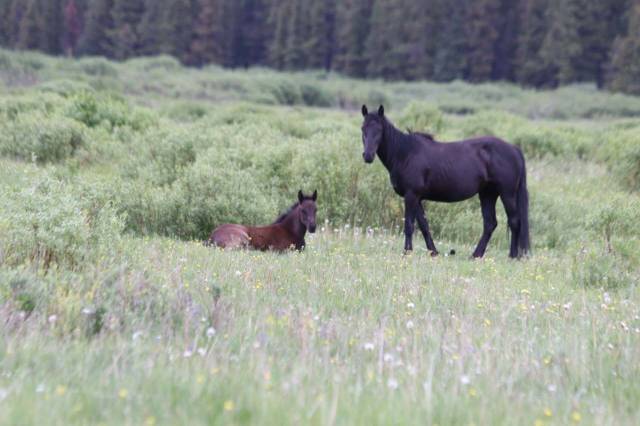
Here in Alberta the government is blaming the horses for the deterioration of the rangeland. As we have stated all along and other advocacy groups and professionals have stated that it is not the horses, but primarily the cattle causing the most harm. In the Equine zones this damage is blamed on the horses. This same damage to the rangeland and sometimes even more so, can be noticed in the grazing leases along the foothills where there are no horses, just cattle.

As stated in this article and by our own Indigenous people, the horses have been on the landscape for millennia.

Here is the article. “Invasive Species on Public Land? Just Say No!”

We know that the deterioration of the native rangeland has many contributing factors. Cattle however do play the biggest role by chronic overgrazing. On these foothill cattle leases, the cattle are currently still out there even though in many areas the grass and forage have been eaten down to almost bare ground. The alleged removal of the cattle is usually mid-October but that can be extended if the cattle owner put his cattle out later than June 1st.
What is disturbing to some who appreciate our Alberta foothills is seeing this overgrazing occur and where there are no wild horses. For example in the Sheep River grazing allotment along the valley floors, the grass is gone and we have found the cattle grazing high up on the open slopes such as Windy Ridge. This used to be prime wintering grounds for the bighorn sheep and elk. This area is also designated as a sheep sanctuary. So what is there going to be left for them to survive the winter? The Rangeland Management department of the Alberta government absolutely refuses to acknowledge the destruction caused by the cattle.

Instead of using sound science they have chosen to go on their own biased beliefs and under pressure from the grazing allotment holders to go ahead with a planned cull and also application of a contraceptive vaccine to wild horse mares in some of the equine zones. There is absolutely no reason for this except for greed and money.

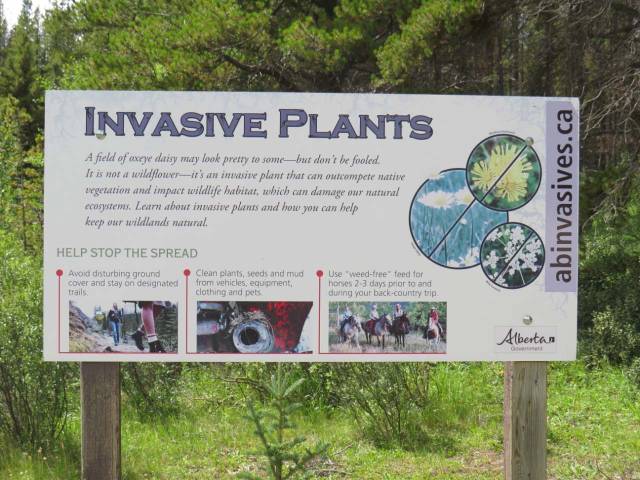
In our travels we have noticed throughout wild horse country a great influx of invasive plant species, especially thistle. It is noted that even the government says that these plant species are a problem. They do post the odd sign in isolated areas talking about what we can do to stop the spread. Nothing about the cattle.

We found it very interesting in a trip to the Cypress Hills that in the equine camping area there is a sign advising equestrians to be careful of the feed they bring to stop the introduction of invasive plants. What we found was that in meadows well away from this area and in the open areas where the cattle were, it was thick with Canada thistle. This problem was never there prior to the government opening up the provincial park to cattle grazing. No wild horses here!

I strongly believe that the Rangeland Management department have completely failed in protecting Alberta’s public lands and they serve no useful purpose anymore, except to protect the cattle industry.

We encourage you to keep asking the government why they refuse to listen to the majority of the citizen’s of Alberta and sound scientific research that shows that the Alberta Mountain Horses do not need to be eradicated.

Clarification Of Some Points

We would like to acknowledge that the Alberta Mountain Horses inhabit the traditional lands of the Stoney lyethkabi, (mountain) people.

Lately there has been a lot of discussion around the plans the government has for removing and applying a contraception vaccine to a large number of Alberta Mountain Horse mares. Despite scientific evidence disputing the need for any population control, the government is planning on going ahead with it, to hell with what a lot of Albertans and other citizens from across Canada say.

The Minister, Todd Loewen, continually misleads the public with statements about the role that the Feral Horse Advisory Committee (FHAC) played in helping make and come up with the 2023 Alberta Feral Horse Management Framework. I was one of the original members of the committee that first started in 2013 . Throughout the whole process and countless meetings, no matter what horse advocates had to say, we were ignored and the government and those on the committee pushed ahead with their agenda that completely disregarded scientific research. He often says that committee members were instrumental in coming up with population management thresholds as outlined in the Framework. This is in fact not correct as we were surprised as to how they came up with these numbers for each of the 6 Equine Zones. What was the basis for arriving at these thresholds? They could never truthfully answer and kept going back to rangeland analysis done by the lease holders and rangeland managers within the government who work with their buddies the ranchers.

The FHAC has just had another meeting of which I am not a part of since I left the other group that I started, because of their anti-wild horse philosophies. I was not invited back because they knew what I would say to about it all, (what I had stated all along since 2013), where is the science? Now another strong Alberta Mountain Horse advocacy group, HAWS, is also no longer on the committee and so it is made up totally of those opposed of to the wild horses being allowed to roam free and wild. The reason for their departure is that they refused to sign a Terms of Reference document which prohibits any member about speaking publicly about what happens in the meetings. Why do they now want this cloak of secrecy surrounding their plans against the horses? The group that I used to belong to is still part of the committee, but they are going to be receiving funding from the government to support the removal and application of the contraception vaccines to the wild horses. This is wrong in my opinion!

The government and Mr. Loewen keep saying that the Office of the Chief Scientist used countless research papers and documents in assisting with coming up with the management plan outlined in the framework. Maybe he did, but only two were based on the Alberta horses and the environment in which they live. One of these studies was done over 50 years ago and guess what, things have certainly changed!!!!

Recently some very creditable professionals have reviewed the government framework document and the information put forth by them. Also a researcher from a western university just completed and published his peer reviewed thesis on the status of the Alberta Mountain Horses and their affects on the ecosystems of the Alberta foothills. All show that this framework and the need to manage wild horses populations is not needed and is based on very misleading biased information.

In order for you to make up your own mind and allow you to more easily see and understand what information is in these independent reviews, one of our members has undertaken to analyze the information and summarize to make it easier to read.

Integrated Summary: McCrory & Boyce on Alberta’s Wild Horses

Two major recent works — Wayne McCrory’s 2024 review of Alberta’s Feral Horse Management Framework and Paul Boyce’s 2022 PhD thesis — provide the most up-to-date scientific insights on the province’s wild horses. Together, they paint a consistent picture of populations that are naturally regulated, ecologically adapted, and often overstated in policy as drivers of rangeland decline.

Shared Findings

• Population Fluctuations: Both studies document natural boom–bust cycles driven by harsh winters, predation and forage limits. Short-term counts can be misleading; multi‑year trends are essential.

• Survival & Reproduction: Mares can foal annually from ages ~3–4, but foal survival is highly variable (very low in predator‑heavy years). Adult survival is generally high, yet winters and predators periodically reduce numbers.

• Ecological Impacts: McCrory finds little evidence of broad rangeland damage attributable to horses, with larger stresses from cattle, OHVs, logging and oil/gas. Boyce’s habitat use results (e.g., reliance on clearcuts) imply a smaller footprint on native grasslands than assumed.

• Heritage & Status: McCrory highlights Spanish Iberian ancestry and Indigenous history; both works underscore the long‑standing, culturally significant presence of these horses.

Implications

Both conclude that predators, winters, and density‑dependence regulate herds without routine culls or contraception. Policy should prioritize addressing the larger human‑driven pressures on the Foothills while improving monitoring.

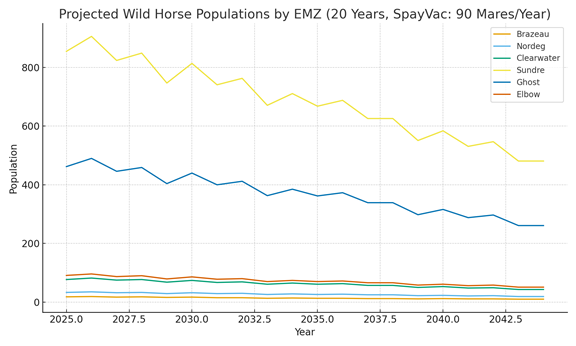
Population Projections (20 Years, per EMZ)

Scenario A: No Intervention

Interpretation: Natural boom–bust cycles yield periods of growth and decline across EMZs; long‑term trends remain bounded by predation, winters and forage limits.

Scenario B: SpayVac Intervention (90 Mares/Year)

Interpretation: Contraception dampens recruitment across EMZs, leading to suppressed trajectories over time, with smaller herds most vulnerable to prolonged low numbers.

We will be presenting a few more of these summaries of recent published documentations in the near future. Please help us and others that truly want to protect and save our beautiful and magnificent Alberta Mountain Horses. Let the Premier know by writing or emailing her because the Minister Todd Loewen does not care about them or to hear from you about them.

Smith, Danielle, Honourable
Premier, President of Executive Council, Minister of Intergovernmental and International Relations Relations
Office of the Premier

Executive Branch
307 Legislature Building
10800 – 97 Avenue
Edmonton, AB
T5K 2B6

Phone: 780 427-2251
E-mail: premier@gov.ab.ca

Mid-Summer Update

As summer moves along we continue to travel out west to observe the horses and monitor the rangeland, (their home).

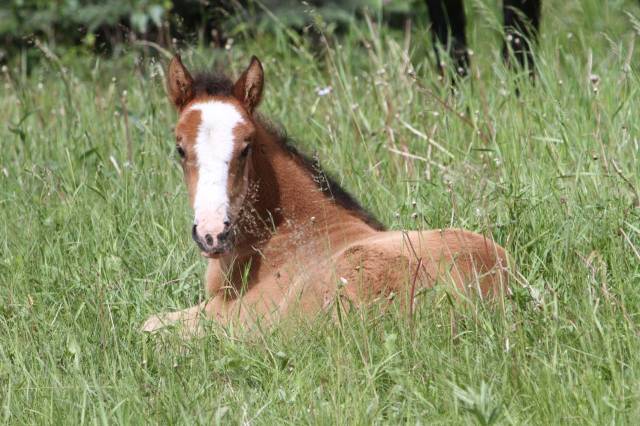
The horses are looking good and the foals are strong and healthy. This stallion is standing guard over his foal. It is just him, his mare and the baby.

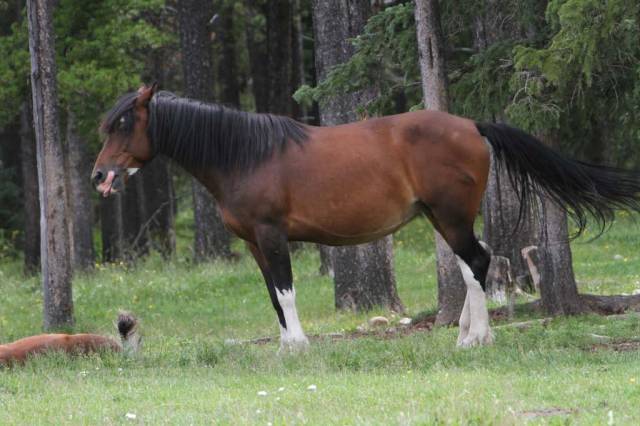
This mare is unique in her colouring and markings, but still so beautiful.

The cattle our now out on the leases and as we continue our field monitoring we are starting to notice the effect they are having on the forage that is available.

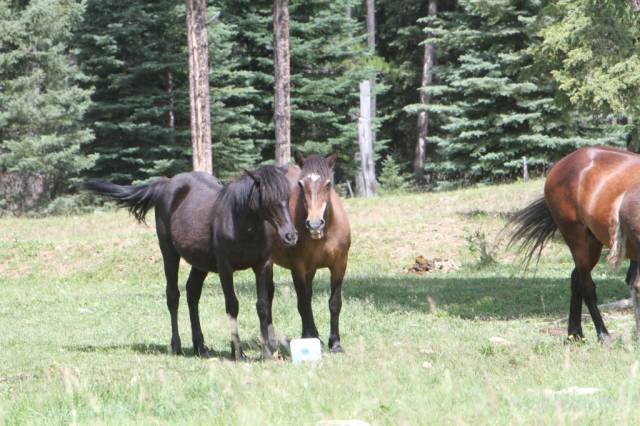
On some of the cattle leases it is great to see that the lease holders are spreading their salt blocks about which helps keep the cattle moving around the range and not concentrating in one spot. The only problem with this is the salt also attracts the horses and other wildlife. Some lease holders in the past have complained about the cost of the horses eating their salt and taking it away from their cattle. Is there an answer to this?

Along with all the other areas of concern we have noted about damage to the rangeland through cattle overgrazing, soil compaction, drought (not this year!) and brush encroachment, there is also one factor you only start seeing as the summer progresses. That is invasive plant infestations. Here a few:

Here is an area overrun with tall buttercup. Tall buttercup is extremely toxic to both horses and cattle. These infestations are only in the areas where they has been human activity such as oil & gas, logging and again, cattle grazing. As such these areas become less suitable rangeland. As we have seen in our own observations, this has become more and more of a problem and is not being addressed by the government.

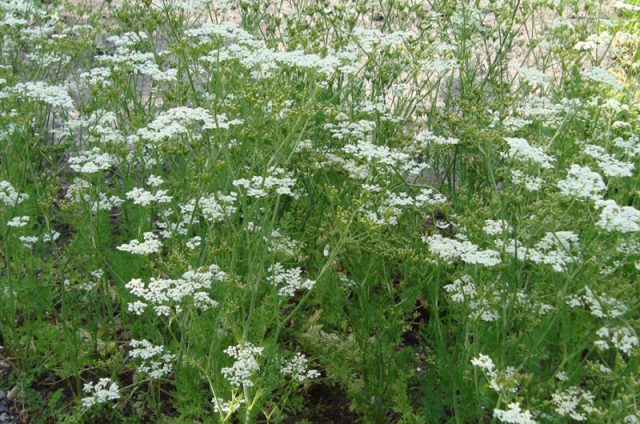
This is wild caraway and it too is becoming more of a problem in certain areas of the foothills. Although not as toxic to cattle as buttercup, it is very toxic to the wild horses.

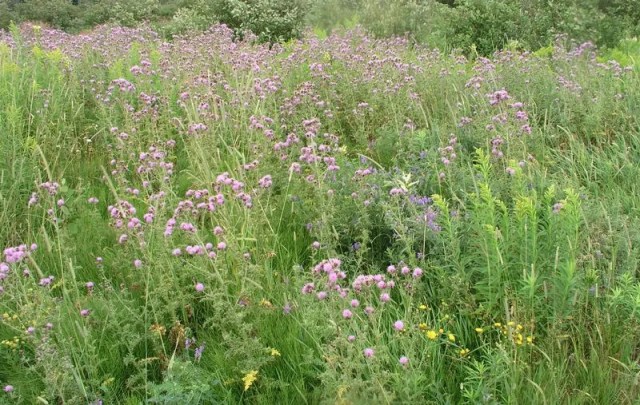
This is Canada thistle and it is also becoming more of a problem to the degradation of rangeland. One thing about thistle that makes it such a problem is that each plant can produce over 20,000 seeds. When the flowers mature the flowers turn to fluff and are carried out by the winds. With this the thistle is spreading into areas where it has never been before – high up on ridge tops.

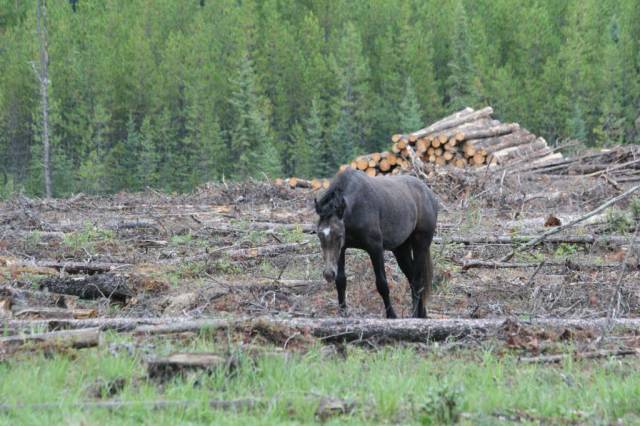
Of course there is still clearcut logging which decimates the landscape and impacts the use of the land by not only the horses, but other wildlife. This young stud is making his way through the clearcut to find the new grass along the edges.

Another thing about this time of year is that the biting insects can become quite a problem for the horses. To relieve themselves they seek out areas in the trees that has bare ground. This gives them some relief from the insects and from the heat of the day. We call this treeing up.

We will continue with our citizen science in order to present our observations to you as we see them.

Summer Time

We would like to acknowledge that the Alberta Mountain Horses inhabit the traditional lands of the Stoney lyethkabi, (mountain) people.

Summer time is here and the Alberta Mountain Horses are looking very good. Their coats are nice and shiny, they have gained good weight, in most cases, and the foals are thriving. Unlike what some people think, the predators are not devouring countless number of foals. Although they do take some, sickness, injuries sustained by living in the wild and occasionally a stallion can injure or kill a new foal. I have never seen this but it has been documented. Life can be hard for these precious little beauties.

This mare, although still a little thin is looking a lot better. She is putting on weight and her coat is nice and glossy, showing she is in good condition. She stands protectively over her foal as some other horses are moving just a short distance away.

This beautiful mare was feeding quite away off from where her foal was sleeping in the sunshine and as we stepped out of the vehicle to photograph her, she quickly walked over to the foal and stood protectively beside the gorgeous little thing.

So far the rain has helped the forest and rangeland making life a little easier for our Alberta Mountain Horses, and the grass is now coming providing good nutrition for the wild horses and other wildlife.

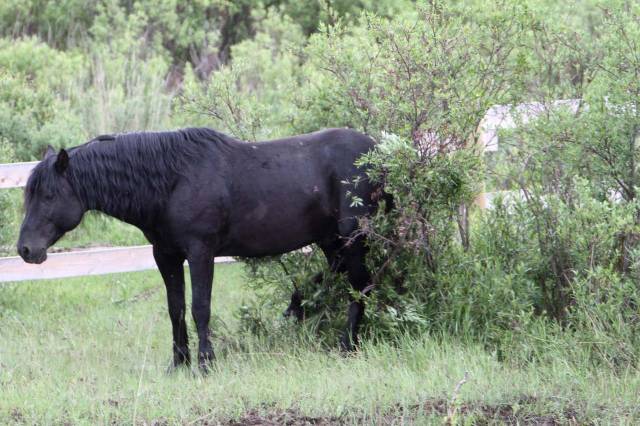
This wonderful stallion who was with his small band took time out of his herd duties to rub his body over some small brushes to get rid of an itch. The horses will also do this to alleviate the annoyance of pesky biting insects. One good this is that so far the bugs are not bad at all out there.

It was fun to watch these two plus a yearling tearing around until mom came over to break up the party!

We came across this small band in a large cutblock area. The young stud along with his two mares and his yearling colt were finding the new grass that has started to grow. But I have a big question here. Are our Alberta Mountain Horses starting to lose their natural behavioral patterns as they get accustomed to so much human activity? It would appear that this so-called domestication of our Alberta Mountain Horses could become a huge detriment to their welfare. In some locales the horses seem to have lost all fear and are hanging out in these areas rather than dispersing into their summer ranges as they have done in past years.

From what I have seen from other photographs from other photographers are the herds of horses hanging out along the roadways. This is a danger to the horses and was a key point that was brought up in the government meetings about having to control the number of horses (cull) due to safety concerns. This point was really pushed by the government in some of the meetings.

No telephoto lens here!

Most of the time we are out photographing the horses we try to maintain a respectful distance away from the horses using our telephoto lens to get the close up photos we like. In this case we had walked out into the opening and were busy taking pictures when this band started to approach us. This was very unusual!

This band was in the same area but stayed far away which is the normal behavior we usually see.

Following us in.
Up close

The horses showed absolutely no aggression or fear toward us, just curious. Several times I would have to push them back as I didn’t want anything to happen to them or us. We decided to slowly leave to prevent any situation arising. The one point here is that we have years of experience and have our own horses and are familiar with horse behavior. Now what if this had been an inexperienced person and something went wrong, it would have been the horses that would have been blamed. That is not right.

Can we come?

The horses followed us right back to our vehicle and I am sure given the opportunity they would have come right up to me. Beautiful horses but I fear for their welfare with this habit they now have. Hopefully they will move off and lose their curiosity.

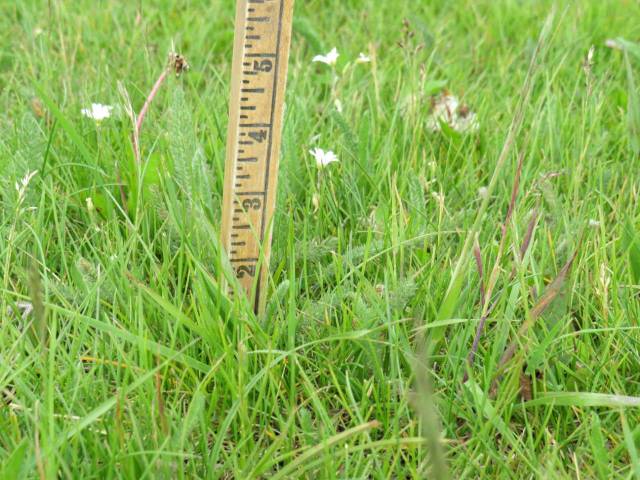
As we stated before we are actively monitoring the rangeland in several locations to determine growth rates and/or decline through over grazing. As pictured here the grass is starting to come in height but is still very sparse overall as the next picture shows.

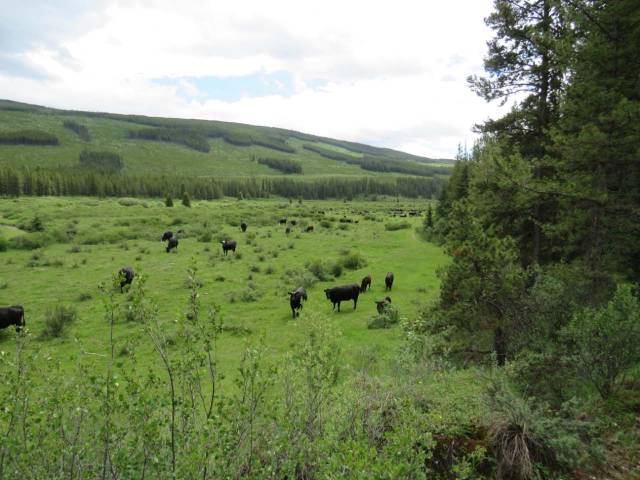
These pictures we taken on July 10th. In this particular valley the cattle have already been put out on their summer range. One questions this choice with so little grass. More and more research is showing that cattle do have a negative impact on the rangeland. This includes soil compaction, introduction of invasive species of plants, plus the deterioration of riparian areas to name a few. These impacts affect all the wild creatures that live in our eastern slopes even the fish in the streams. No one in the government and those opposed to the wild horses are willing to look at this and would rather blame the wild horses.

Everything looks lush and green until you look more closely. In this one valley we saw more cattle in such a small area than the total number of horses last counted in this whole equine zone. What is right and what is wrong? We will let you determine.

A Happy Ending

We would like to acknowledge that the Alberta Mountain Horses inhabit the traditional lands of the Stoney lyethkabi, (mountain) people.

It all started as usual as we went out to monitor the rate of grass growth at several locations in the Equine zones. As a note on this, we do have teams of volunteers doing this monitoring in the Equine Zones, except the Nordegg and Brazeau zones. This will assist us in our citizen research into what affect the horses have on the rangelands in these zones.

It was a chilly start to the day and the valleys were hazy filled with thick smoke. None the less, it is always great to be out in the foothills of our province. As we travelled we began to see the Alberta Mountain Horses we love so much and began to photograph the different horses that we came across.

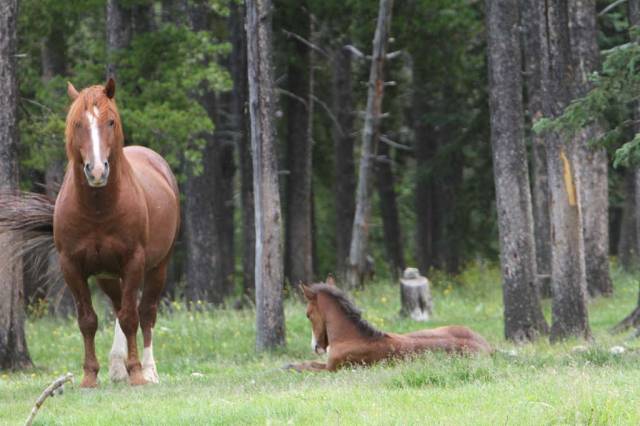
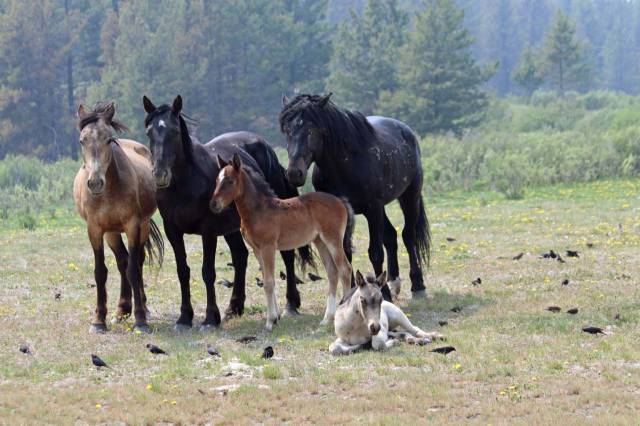
As we went along we came across an area with several horses with a few young foals frolicking about or sleeping. Everything was serene and peaceful, making one appreciate so much what these beautiful horses represent to all of us that take the time to advocate to get them better protection and respect.

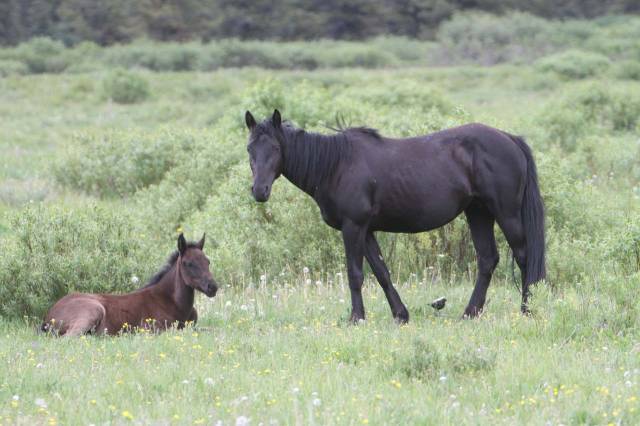
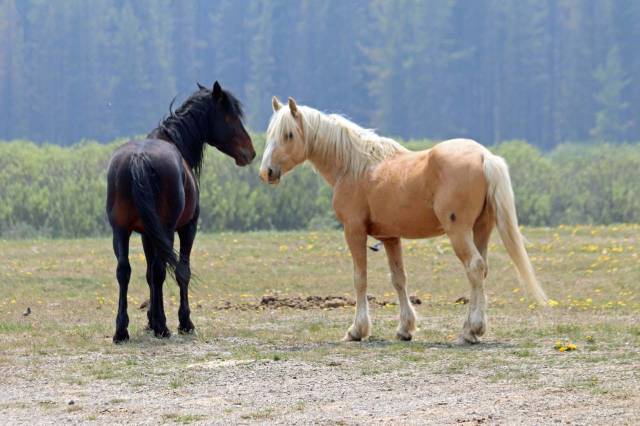
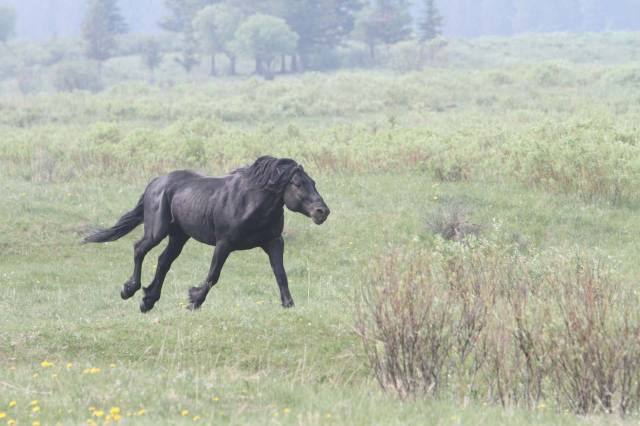
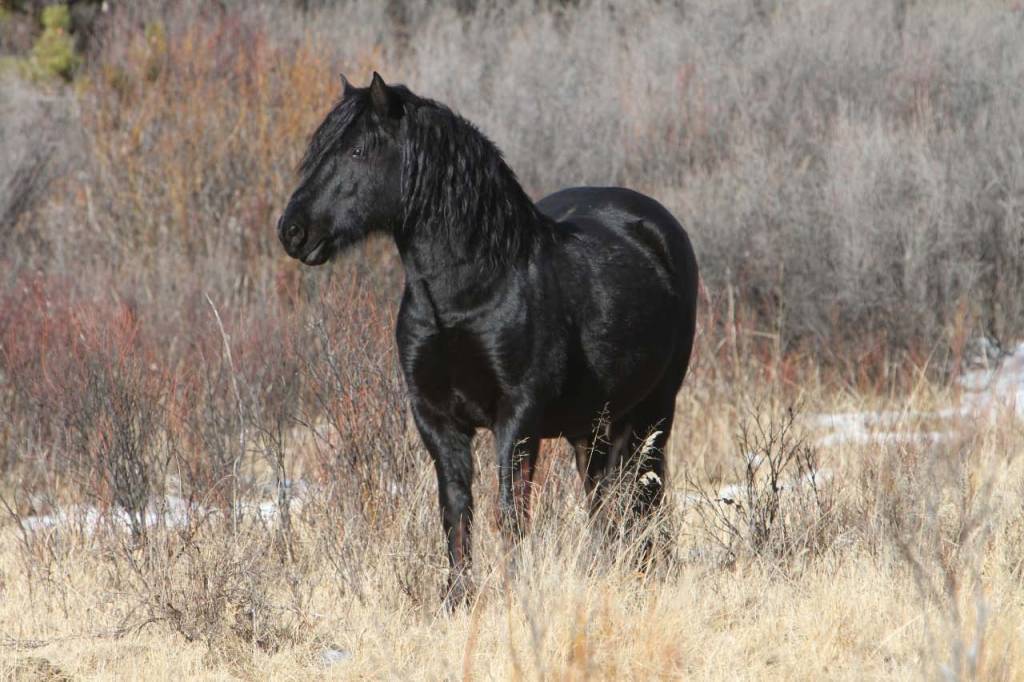
As we went along we came across the small family group we consistently see of a beautiful black stallion, a black mare and their foal. We are quite familiar with this family and they always seem to be off by themselves away from other bands in the area. It was great to see their foal is so healthy and growing quickly.

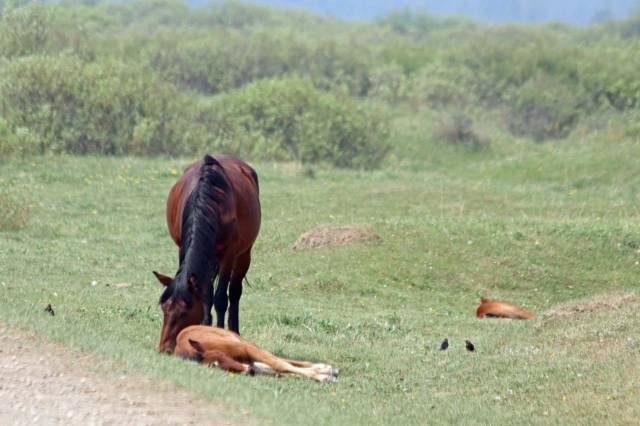
A little further along we noticed one little foal sound asleep with the mom a short distance away and another mare and its foal close by. Here’s where the story starts.

It is the little foal further out that we were about to have some anxious moments about. But in the meantime we enjoyed the beauty that surrounded us and continued our drive to another of our grass monitoring sites. We continued to take pictures of the horses we saw. We came across this family with a battle scarred stallion. They struck a wonderful family pose for us.

Heading back into the area where that we had just mentioned we found that the bands had moved off from where we had first seen them. We saw that one of the stallions was chasing a mare of his who kept trying to go back to where they had come from. We didn’t know why this was happening.

Just a short distance down the road we came across the foal all by itself still flat out. Something was wrong here as there was no mare nearby. Most of the bands had moved a considerable distance off. We watched this baby from a short distance and it appeared to be in difficulty. We were very concerned and were unsure as to what to do. We always have a baby halter in the truck just in case. We decided to approach it to see if it was hurt. It could barely lift its head and didn’t move. It seemed to have trouble breathing. Had it been hit or kicked? I approached it and it hardly responded to me touching it to see if its legs were okay or if we could see if there were other injuries. I pulled it onto a little bit of a side hill and this immediately seemed to help it a bit as it was able to lift its head. It started to breath easier but still its mare was no where around.

All of sudden the black stallion and his mare that stay off by themselves started to approach and call out to warn whoever that someone was touching their baby. At this point we backed off to see what would happen. Remember it is not unusual for mares to leave their sleeping foals as they feed off a bit. We stood back as these two continued to call and we wondered what would happen next.

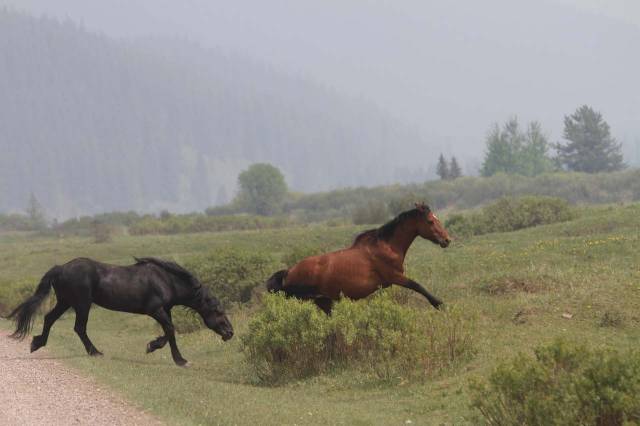
All of a sudden thundering hooves and here came the stallion that was previously chasing his mare. He was at full speed coming towards the other three horses. Right behind him came the mare that he had been chasing. The stallion charged toward the horses that had been calling and suddenly saw his foal just laying there. Under his breath it seemed like he said “Get up and run!” That is exactly what happened. The foal sprung to his feet and raced off at full speed, joined up with the mare, his mom, and off they went at full gallop with the stallion chasing them at their heels.

Such a relief to discover this little foal was okay and able to join back up with his band. We when looked back we could see that he was nursing! It was not the fault of any of these horses. It is just the way it is in wild horse country. Sometimes you just have to let nature be. This is such a happy ending!

More Questions

We would like to acknowledge that the Alberta Mountain Horses inhabit the traditional lands of the Stoney lyethkabi, (mountain) people.

The Alberta Mountain Horse Society is continuing to bring the facts surrounding the decisions that the government makes in what they call population management strategies. A lot of what is presented to the public by the Minister of Forestry and Parks, Todd Loewen and his staff is, we believe, misinformation. Based on their preconceived prejudices against the wild horses, they prefer to paint a picture that it is the horses fault that the ecosystems Equine Zones in our Alberta Mountains and foothills are being impacted negatively by them. We do not believe this and have for many years sounded the alarm that there is no scientific proof of this and that the horses are being used as a scapegoat for their lack of proper management of our Alberta lands, natural resources and wildlife. So what we will continue to do is to present the facts in order that you can have a clear picture of activities that are having a negative impact.

What effect do cattle grazing have on the rangeland and the wildlife?

We talked about this in our last post but we believe this is an area of concern that needs to be continually brought forward. Here are some more observations that we see by the time the cattle are removed from the grazing allotments in mid-October.

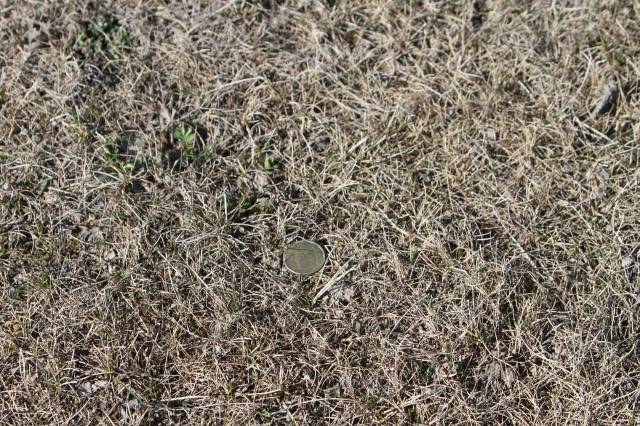
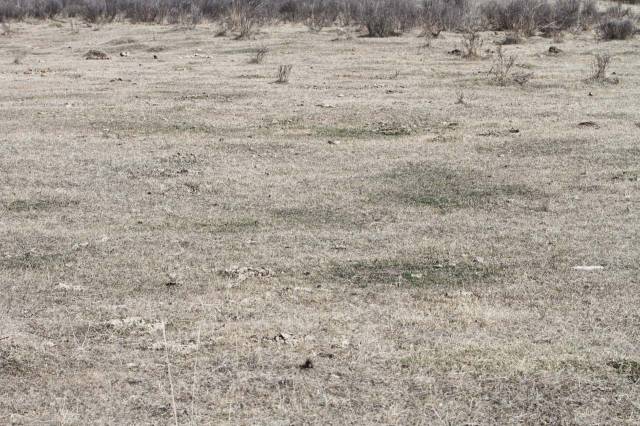
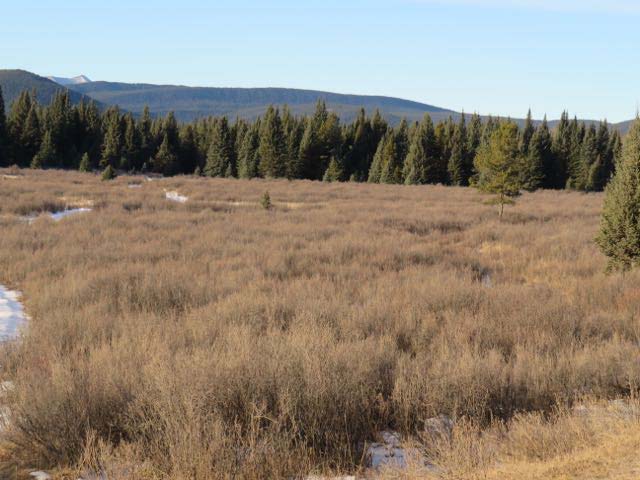
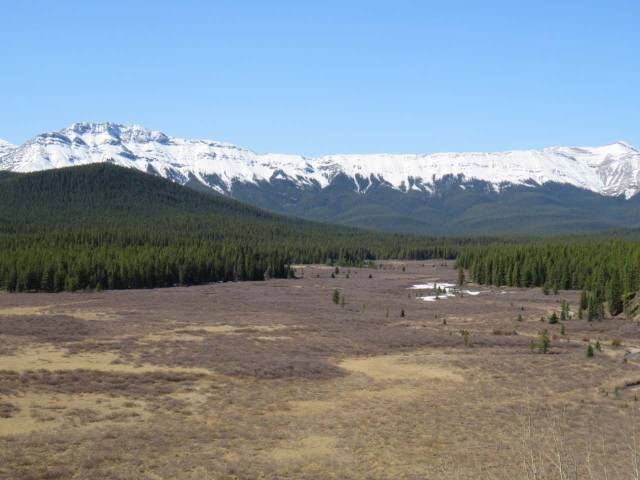
The first picture was taken just this month in the Clearwater Equine Zone and with the coin on the ground you can see how little feed is left for any wildlife or the horses. The second picture just backs this up that there is nothing there. This chronic overgrazing has a very negative impact on the grass and the soil substrate. The soil becomes very compacted and invasive plants will takeover from native grass.

These valleys, where this damage is occurring, used to be the wintering grounds for elk and deer. Nowadays though there is nothing for the wildlife to survive on in the winter months. They therefore have had to migrate into different areas. The wild horses, though there are a few in this area, do not have the ability to move and therefore have to eke out an existence as best they can. What is amazing and shows the resilience of these horses is that somehow they are able to do this by finding areas where the cattle can’t go or have not been.

In talking to an oldtimer, and a person with lots of experience in this country about this problem, he stated that “I have never seen a cow starve to death out there on the range, but I have seen lots of horses and deer die of starvation.”

This lack of forage in the early spring can greatly impact the pregnant mares and their ability to successfully carry their foals to full term.

Then you take into consideration the extensive brush encroachment which chokes out the grass and limits even the cattle’s ability to feed. This causes them to become more concentrated in open areas thereby exacerbating the problem for all animals.

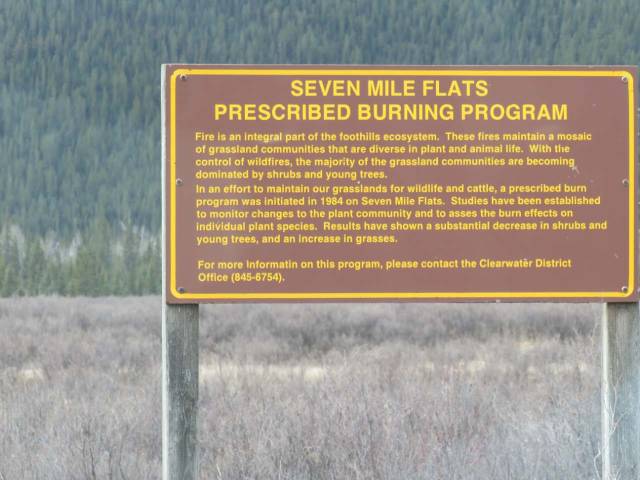
This sign is still posted alongside the forestry trunk road stating that in 1984 that the government tried to control the brush by burning. Obviously you can see from the pictures above that they have not done anything since. And yet they claim that the horses are the problem that there is no grass for the cattle or elk and deer.

Many individuals and groups continue to try and blame the horses for there being a lack of elk and deer in these areas but one only has to take into consideration all these other factors that it is not the horses. Personally, myself, I have been enjoying this country for well over seventy years and have seen the reduction in numbers of wildlife diminish because of the increase in cattle grazing in these once pristine environments. It is quite obvious to some of us that there has been a gross mismanagement of our wildlife resources by the Alberta government biologists over many, many years. Just look at the most recent events about lifting the restrictions around hunting of grizzly bears, wolverines, female cougars with babies, other species. Also at play is the destruction of the wildlife’s natural habitat from a lot of these industrial activities.

What about the damage to the environment left by the oil and gas companies?

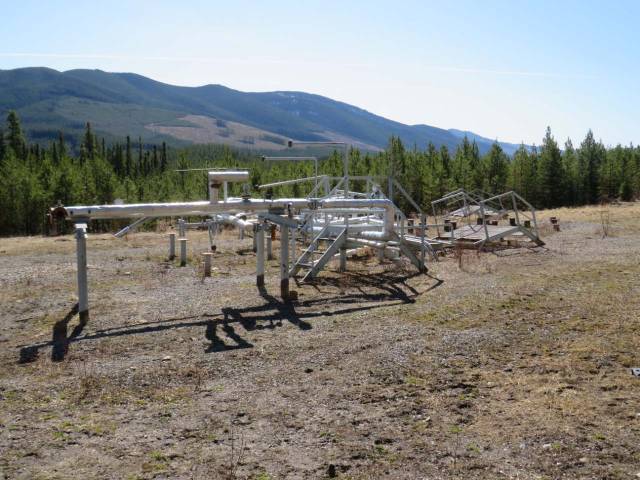
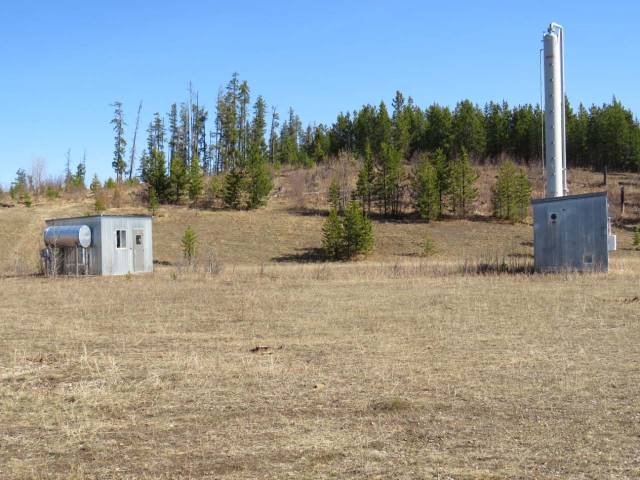
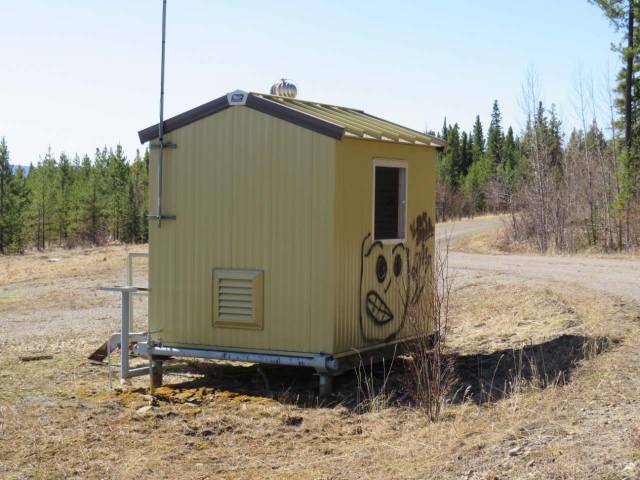
When travelling throughout our province but especially in the mountains, you see the abandoned wellsites left by the oil companies. Whole hillsides have been cleared in order for them to put up their wells to extract the oil or gas. Then once they have done making their millions they abandon these sites leaving quite an eyesore to what is supposed to be a pristine environment. Here are a couple of pictures taken way back on top of a ridge far from the valley below.

We have also found at several sites that barbed wire had been put around the area and the fences have fallen in complete disrepair. This wire then becomes a hazard to not only the wildlife and horses, but also other users, like ourselves on horseback. One year we had found a new foal that had become hung up on the barb wire and had to be rescued. The foal did survive but this just highlights the problems that can arise by the neglect.

Now instead of taking action to make the oil companies responsible for cleaning up the environment, the Minister Todd Loewen and his bureaucrats would rather blame the wild horses for ruining the landscapes. Wouldn’t it be better if they used their money in their feeble attempts at what they call “managing” the wild horse population and to go after these companies instead?

Why is nothing being done about this?

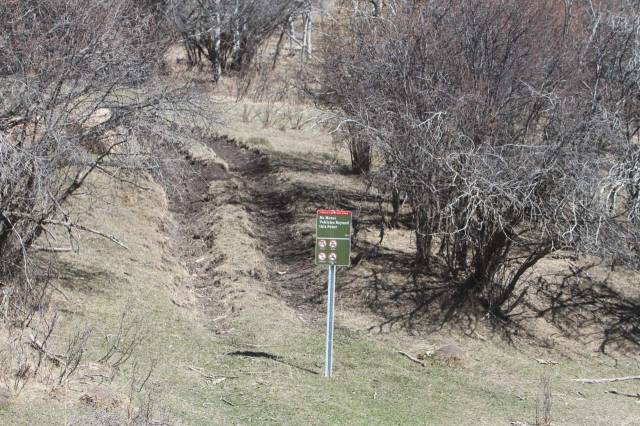
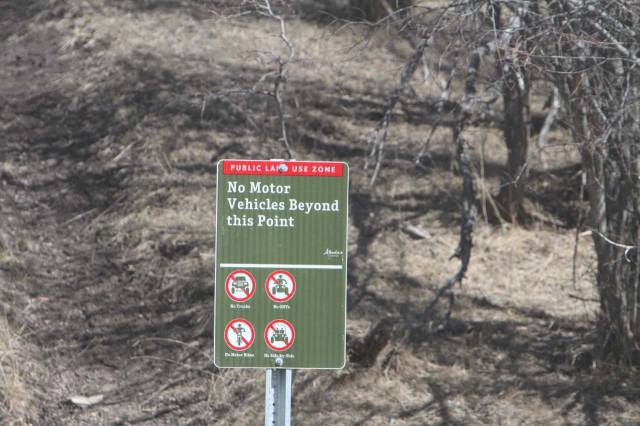
I know previously we have brought up this point about the hillside by the Red Deer River Ranger Station being damaged by a very few inconsiderate ATV users. Even other ATV users get upset that these individuals spoil it for all and bring them a bad name. I have tried to bring this to the attention of the government officials, but they steadfastly refuse to do anything about this. This picture shows that in one area where there are not many ATV users that action can be taken to prevent further degradation of the land. Why is there refusal to take action here, is it just because we advocate for the wild horses and they don’t want to listen to us?

Signage like this could prevent any further damage to the hillside pictured below.

Along with other advocacy groups we will continue work toward having our Alberta Mountain Horses given a distinct identity by the government as per the wishes of Albertans. Its a continuing battle because of the government officials more interested in hearing from the money interests than those of us who care about our environment, ecosystems and wildlife.

We hope you will continue to contact the government to express your concerns and wishes about our Alberta Mountain Horses. Your voices do matter.

Questions

We would like to acknowledge that the Alberta Mountain Horses inhabit the traditional lands of the Stoney lyethkabi, (mountain) people.

Over the years of fighting so hard to try to have our Alberta Mountain Horses afforded better protection and to save them for all future generations, I keep having questions about why this simple thing is not being done. Continually the Alberta government has refused to take any sincere and positive steps to assure their survival. The Feral Horse Management Framework, (FHMF) that was brought forward to allegedly manage the wild horse populations in Alberta’s six equine zones is full of flaws and misinformation. It is very biased in favor of stakeholders who are opposed to sharing the land with the wild horses.

The Framework document has been reviewed by professional individuals, including Wayne McCrory, a world renowned biologist and researcher. We have talked about his review in pasts posts, but again it was not a favorable review of this management framework. It definitely appears to a me that there is an absolute refusal of those in the Alberta government who are in charge of making decisions concerning the management of the wild horses, to look beyond their preconceived prejudices against the horses. Everything they see is that the horses are having a negative affect on the ecosystem integrity of the equine zones. Even though in the framework they talk about decisions that are to be made will be based with science and data .(?)

In the FHMF it brings up the threshold numbers for each of the 6 equine zones and that this will determine the action to be taken to manage the wild horse population.
So my first question is –

How and who came up with these numbers?
The thresholds that determine action to be taken are #1 – no action needed, #2 Concern and monitoring needed and #3 population levels are unacceptable and immediate action needed. The numbers for the Equine zones are as follows.

Brazeau EMZ – Threshold 1: 18 horses and threshold 2: 30 horses – any number above that would have them culling horses.
Nordegg EMZ – Threshold 1: 64 horses and threshold 2: 80 horses
Clearwater EMZ -Threshold 1: 99 horses and threshold 2: 150 horses
Sundre EMZ – Threshold 1: 628 horses and threshold 2: 1000 horses
Ghost EMZ – Threshold 1: 226 and threshold 2: 400 horses
Elbow EMZ – Threshold 1: 84 and threshold 2: 100 horses

So where did these threshold numbers come from and who determined them? What scientific base did they use to determine them? No one in the government can tell us this. If it based on their rangeland assessments done each year then it would be very prejudicial against the horses as these are done by the cattle allotment holders using their own agrologists.

Should annual census minimal counts be the reasoning for threshold management?

Every year the government does an aerial survey of the number of horses they find in each of the equine zone. Well almost! The last couple of years the Brazeau and Nordegg areas were not counted and in 2023 the Elbow zone was not included. These numbers do vary from year to year. That is not the argument.

For several years when I was on the FHAC committee I argued that no decision to cull or such can be made on the counts for just one year. It would take 3-4 years of high stable counts to be able to make an accurate assessment on a management strategy for that particular zone. To show you the ups and downs here are the counts for the last 4 years.

2022 – Nordegg 20 / Clearwater 79 / Sundre 642 / Ghost 353 / Elbow 84
2023 – Nordegg 33 / Clearwater 97 / Sundre 969 / Ghost 311 / Elbow – not counted
2024 – Nordegg n/c / Clearwater 156 / Sundre 839 / Ghost 372 / Elbow – 111
2025 – Nordegg n/c / Clearwateer 77 / Sundre 855 / Ghost 462 / Elbow – 91

If these counts are used to determine a cull, then the system is seriously flawed. In 2024 the Clearwater and Elbow Zone showed counts over the maximum threshold that was arbitrarily chosen and the government was going to take action by a capture and contraception program in these zones. This year both are under this threshold when nothing was done, but the Ghost is way up. We are talking according to their counts, 90 horses. Are they going to call for a cull here now?

As I stated no decisions on removing horses based on just one year’s count. Also the people doing the counts are also the government people making the decisions about population control. Is there something afoot here?

Why Are the voices of the First Nations People being ignored?

When the FHAC first started there was no representative from the First Nations people and some of us questioned why they were not included. The head of the committee could not give an answer as to why they were ignored. Then when the second go round of the FHAC began, a representative of the Stoney Nation was included and he was their conservation expert and very knowledgeable as to the lands and the history of the wild horses that live on their traditional lands.

During the committee meetings his insight about the horses and the effect they may be having on the lands was extensive and thoughtful. In the FHMF that was produced as a guideline to managing the wild horses, they even state in the objectives that; “First Nations perspectives and knowledge are considered in how horses are managed” . This definitely was not done. When their representative was informed of the MOU that was signed between the government and WHOAS, he was very upset. The Stoney people were not informed about this MOU being signed or were even consulted to gain their input. Why not?

My own opinion is that the Stoney representative, remember a conservationist, had stated in the FHAC meetings that cattle should not be allowed to graze on these lands. Once he stated that he was shut out of any input into the management strategy and subsequent signing of the MOU.

Is any research being done to show what type of negative impact cattle grazing has on the rangeland of the foothills?

The whole time that I have been involved with the wild horses, I have heard over and over again that the horses are causing severe damage to the rangeland of the Equine zones and that is the reason that their numbers have to be controlled and/or reduced. When asked for scientific evidence and research to back up these claims, the government was unable to produce any to the FHAC horse advocacy groups. The office of the chief scientist for the government quotes lots of research papers on wild horses on the landscape, but all but one are from the United States. As we have stated before, these claims about damage being done by the wild horses in the Equine zones have been shown to be unsubstantiated, by professional Canadian researchers, the governments own rangeland assessment reports and even the head of ESRD at one point stated that they could not point out any specific damage.

What was pointed out from some of the stakeholders of the FHAC and other conservation groups is that it is the cattle on the range allotments in the Equine zones doing the damage and not the horses. So why is this not being heard by those in charge of Forestry and Parks, who make the decisions concerning wild horse population control?

Why is there no research being done on the negative effects of cattle grazing on our Alberta public lands? Research in other jurisdictions have shown that cattle indeed do have a negative impact. Instead of going into detailed descriptions here are some of the points that have been presented about this for you to ponder and come to your own conclusions.

    1/ Cattle grazing defoliates native plants, tramples vegetation and soils.
    2/ Cattle grazing accelerates the spread of exotic (invasive) species resulting in a shift in landscape function.
    3/ Cattle grazing degrades riparian zones and wetlands, which are also significant carbon sinks.
    4/ Cattle grazing has also been shown to remove native perennial grasses establishing the ability for exotic species to take over.
    5/ Cattle grazing on public lands can have significant impacts on the environment, including soil erosion, reduced biodiversity, and increased green house gas emissions.
    6/ Cattle grazing disrupts natural processes and contaminates waterways with fecal waste.

    With all these factors about the negative effect of cattle grazing on public lands, why is there a refusal of our government rangeland management to look at the damage being done to the ecosystems, not by the horses, but by the cattle? Over the years I have stressed that damage in the equine zones that is blamed on the wild horses, is also being inflicted on grasslands where there are no wild horses, all along our foothills.

    The future of our Alberta Mountain Horses depends on you not letting the government make unsupported decisions on the welfare of our beautiful horses. I have more questions regarding the FHMF strategies that the government outlined but are ignoring. So to be continued.

    Keep supporting efforts to stop any capture or contraception by signing the petition. There is still time to get these signatures in by May 31, 2025.

    Petition to Save the Alberta Mountain Horses