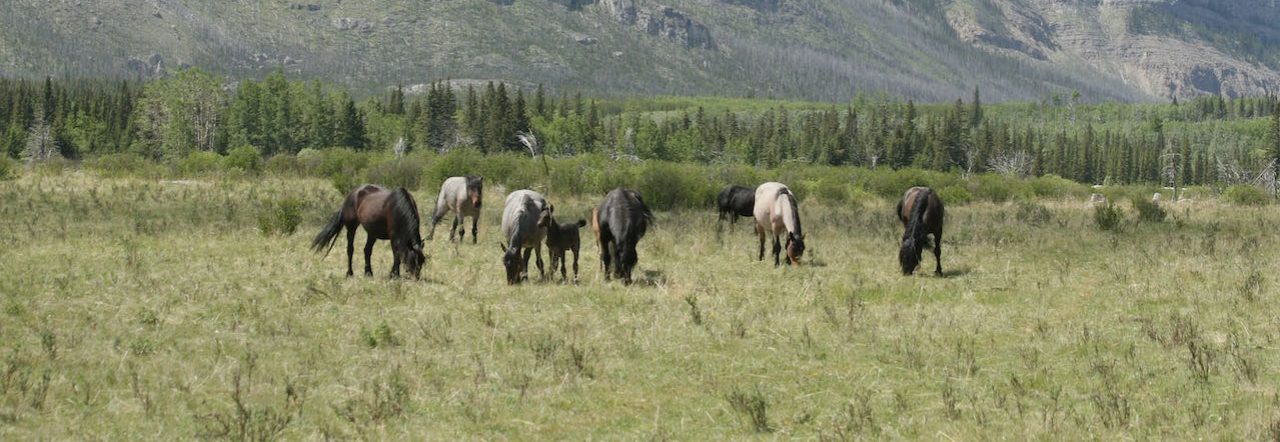
We would like to acknowledge that the Alberta Mountain Horses inhabit the traditional lands of the Stoney lyethkabi, (mountain) people.
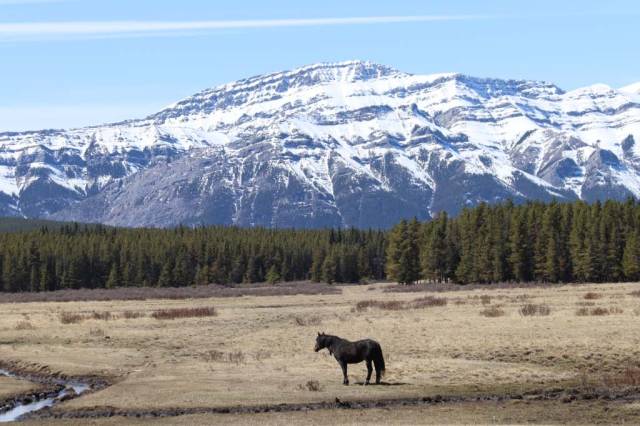
We believe strongly that in order to get our beautiful Alberta Mountain Horses better protection and to have them managed properly, that it is time to have them recognized as a distinct and unique species. They are classified now under government regulations and ideologies as an invasive feral animal. This is so wrong and shows the complete lack of insight by government departments and those groups who want the horses gone, as to how these wild horses came to be on our Alberta landscape. They continue to refuse to listen to science and native oral history about the horse, how it arrived in this part of Canada.
As we have pointed out in the past, DNA research done by a University of Calgary genetic researcher and also by one out of the University of Texas, shows that the Alberta Mountain Horses are indeed unique to Alberta having evolved into their own distinct species, just like the Canadian horse.
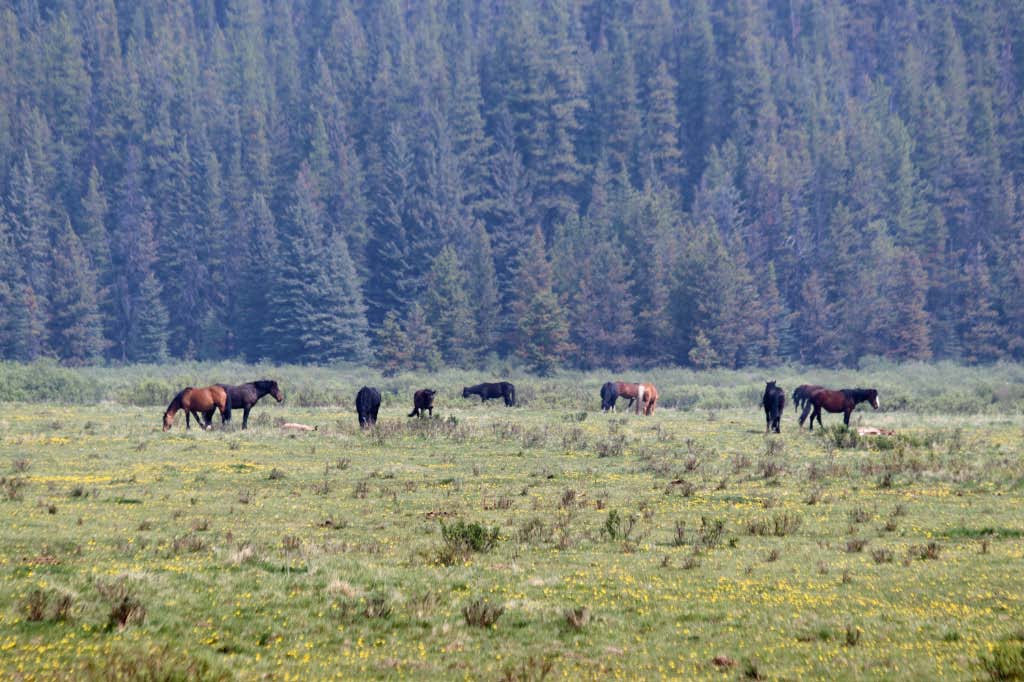
According to a research paper submitted by A. Kincaid, North America is recognized as the cradle of all the original bloodlines of horses that have populated the rest of the world. This makes the case that horses were at one time “native” species to this continent. By having the wild horses given a distinct identity to afford them protection and inclusion, then research and science could contribute to this effort and thus it could be submitted to the Committee on the Status of Endangered Wildlife in Canada, (COSEWIC). This committee recommends species to the Species at Risk Act and they deem a species wild if it is native and has persisted in Canada for more than 50 years. It is threatened if a 10% decline in population over 100 years occurs. With the current plans being considered by the government and based on the criteria of COSEWIC, the Alberta Mountain Horses are wild and threatened. Definitely a change in policy is needed.
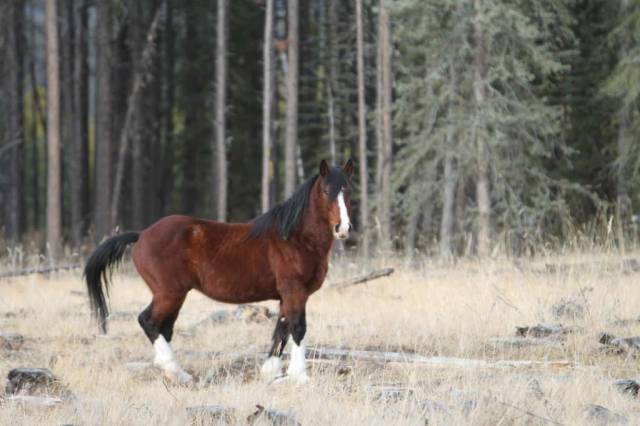
In a recent post on her FB page Deb (De Dutch) posted an interesting one called “What’s in a name? More than you think.) with her permission, I am posting it here for all to read. It definitely points out everything that we have been saying surrounding the closeminded attitude of government officials toward these magnificent horses .
“Feral?
What’s in a name? More than you think.
Words have power. They influence our emotions, color our perceptions, spur us to action or weigh us down with despair. A single word can bring an entire story to mind.
For centuries the free roaming horses of the Alberta foothills have been labelled as ‘feral’. Nothing more than recently escaped domestic horses
DNA testing by Dr Gus Cothran confirms they trace their ancestry to the Canadian horse, the Spanish Iberian and Indian ponies.
The Canadian horse is a light draft breed developed in the province of Quebec and brought over to Alberta for logging and mining. The Spanish Iberian was introduced to the America’s by the early explorers. The presence of both these domestic breeds in the bloodlines of our Wildies would seem to support the theory that some of them escaped or were released. However, that was more than 400 years ago.
The presence of Indian pony bloodlines presents a different picture. According to Nakoda Indigenous knowledge keeper Barry Wesley, whom I interviewed, the horse was always here. He referred to the theory that horses went extinct on the North American continent after the ice age, as the ‘white man’s story’.
Dr. Claudia Noetzke, world renowned wild horse expert stated that archeological evidence which supports the Indigenous claim, has been suppressed.
Dr. Gus Cothran, who performed the DNA testing, found these horses bred true, indicating they had become a breed unique to Alberta.
Why do names, labels or classifications matter?
If horses never went extinct, they would be classified as a native species, which means they would have legislated protections in place.
If they did go extinct, they would be classified as a reintroduced native species, brought back by European explorers. This classification would also come with legislated protection.
Alberta Wildies, meet the Canadian federal government definition for a naturalized species, which the Sable Island horses fall under. A naturalized species has lived in the wild, free from human intervention for more than 50 years. Alberta Mountain horses have lived wild for more than 400 years. This classification comes with legislated protections.
One reason they are not presently classified as a naturalized species is because they do not reside in a federally protected national park. Therefore, they fall under provincial, not federal jurisdiction. If the horses crossed over into the YaHaTinda, Banff or Jasper parks, they would fall under federal jurisdiction.
Feral species fall under the stray animal act with weak and little to no protection.
The biggest issue with the word feral is in how the wild horse antagonists and the provincial government wield it. These same people often use the word feral interchangeably with the term invasive species( another slur which is also scientifically inaccurate). They use it as a weapon in the same manner an abuser uses a slur to objectify his victim. Turning a living creature into an object allows the abuser to justify his abuse and derogate his victim more easily.
The provincial government and wild horse antagonists are reluctant to let go of the derogatory term feral. A slur the Alberta government used in the last century to pay ‘Mustangers’ for the severed poll scalps and ears of ‘feral’ stallions, mares and even foals.
The provincial government and wild horse antagonists still wield the term feral as a weapon to justify the removal and sterilization of a vulnerable, minority population of horses into extinction.
This is why wild horse advocates do not use the term feral and are fighting to have the horses reclassified to their scientifically correct designation as a legislatively protected naturalized species.”
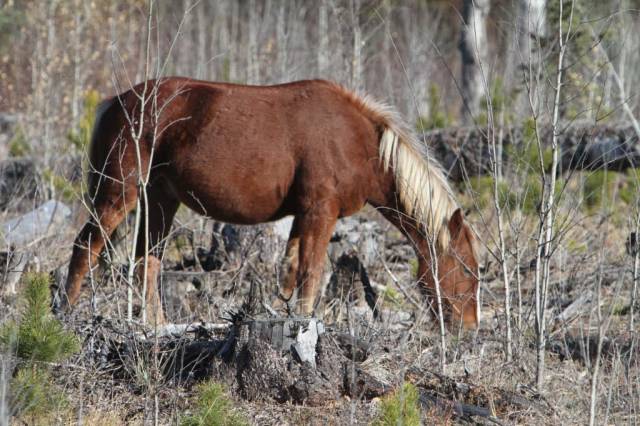
Right now we are researching the difference between an animal being designated as (1) a “naturalized” or (2) “re-introduced” species. In regards to naturalization, it involves the species surviving in a new environment and reproducing independently of human help. Further it integrates into the ecosystem, sometimes so thoroughly it becomes difficult to distinguish whether it is native or introduced, i.e., definitely our wild horses.
The definition of a “re-introduced” species: The species was once native to a particular area (all horses originated in North America); disappeared or became locally extinct in that area and has been returned to the wild in that same area. Whether this reintroduction was done accidently is not really a factor. According to some ongoing current research information has come to light to show that the horses really never did become extinct in North America. As noted above according to our First Nations people, this is just the “white man’s story.”
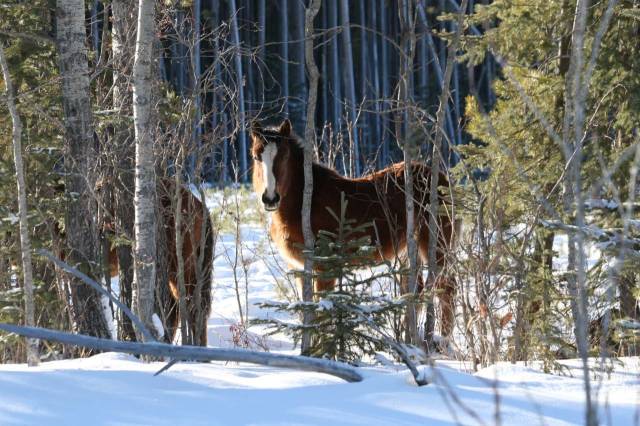
There is a lot more to be done in order to achieve having our Alberta Mountain Horses redesignated and protected, but we are dedicated trying to achieve this goal. This is hard as we have to overcome the negativity and close-minded attitudes of our government. Wish us luck!
 Alberta Mountain Horse