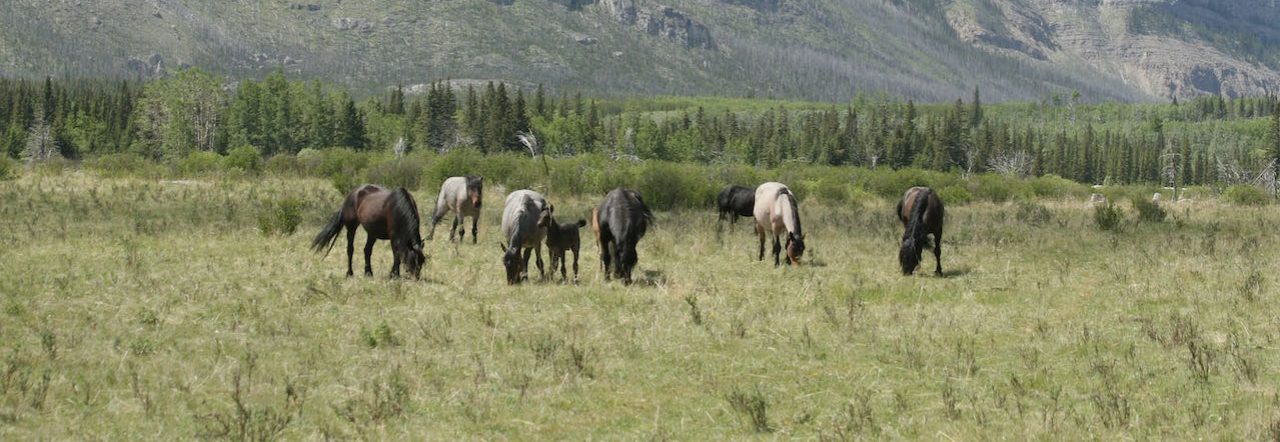

As summer moves along we continue to travel out west to observe the horses and monitor the rangeland, (their home).
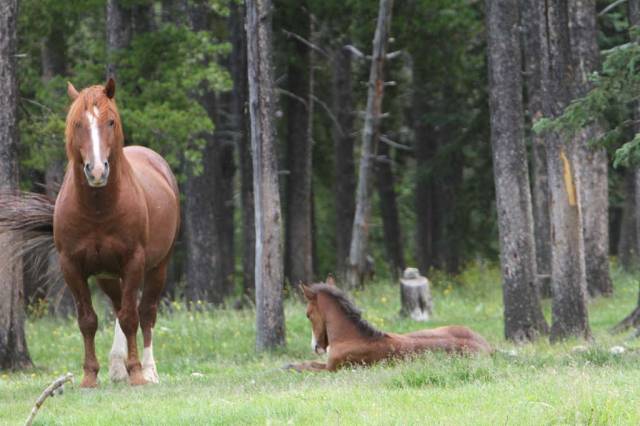
The horses are looking good and the foals are strong and healthy. This stallion is standing guard over his foal. It is just him, his mare and the baby.
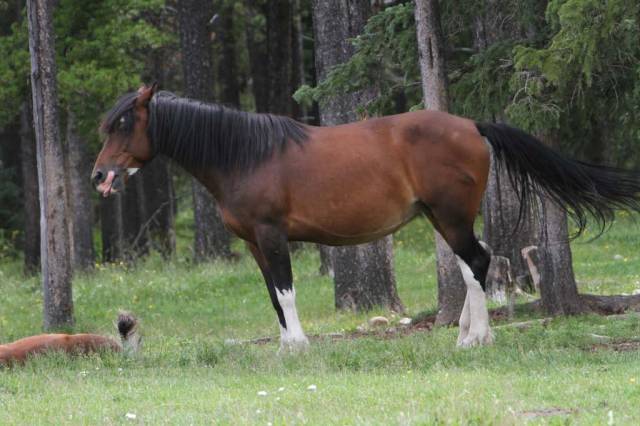
This mare is unique in her colouring and markings, but still so beautiful.
The cattle our now out on the leases and as we continue our field monitoring we are starting to notice the effect they are having on the forage that is available.
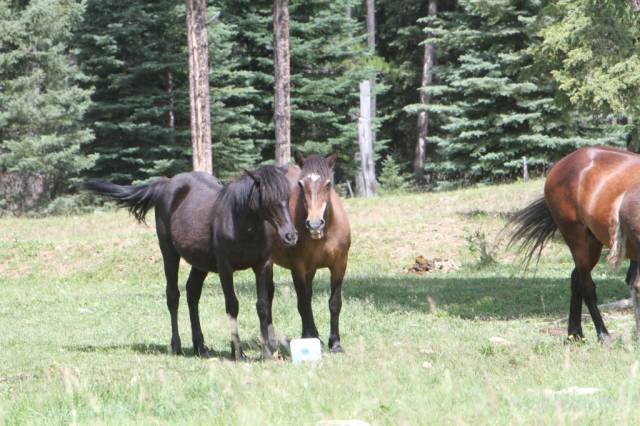
On some of the cattle leases it is great to see that the lease holders are spreading their salt blocks about which helps keep the cattle moving around the range and not concentrating in one spot. The only problem with this is the salt also attracts the horses and other wildlife. Some lease holders in the past have complained about the cost of the horses eating their salt and taking it away from their cattle. Is there an answer to this?
Along with all the other areas of concern we have noted about damage to the rangeland through cattle overgrazing, soil compaction, drought (not this year!) and brush encroachment, there is also one factor you only start seeing as the summer progresses. That is invasive plant infestations. Here a few:
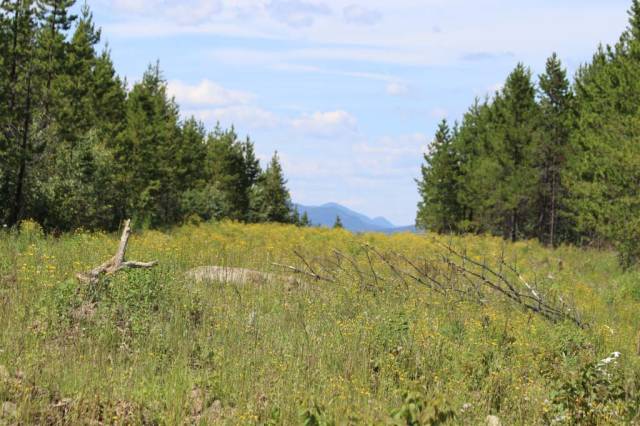
Here is an area overrun with tall buttercup. Tall buttercup is extremely toxic to both horses and cattle. These infestations are only in the areas where they has been human activity such as oil & gas, logging and again, cattle grazing. As such these areas become less suitable rangeland. As we have seen in our own observations, this has become more and more of a problem and is not being addressed by the government.
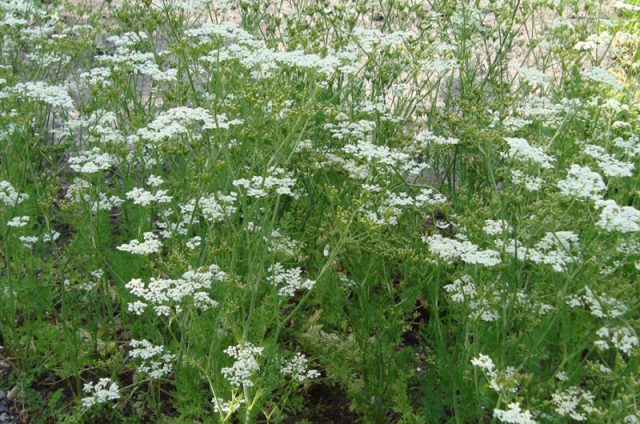
This is wild caraway and it too is becoming more of a problem in certain areas of the foothills. Although not as toxic to cattle as buttercup, it is very toxic to the wild horses.
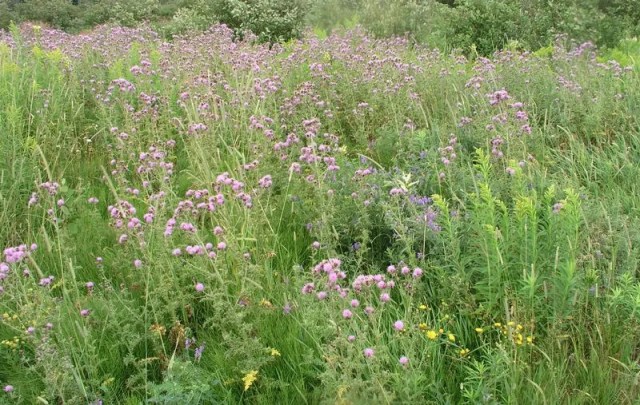
This is Canada thistle and it is also becoming more of a problem to the degradation of rangeland. One thing about thistle that makes it such a problem is that each plant can produce over 20,000 seeds. When the flowers mature the flowers turn to fluff and are carried out by the winds. With this the thistle is spreading into areas where it has never been before – high up on ridge tops.
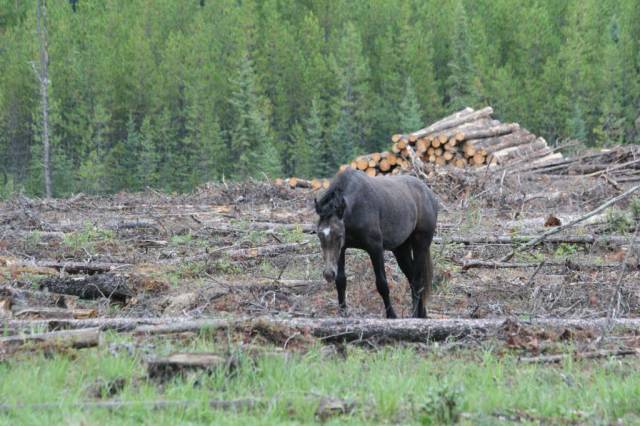
Of course there is still clearcut logging which decimates the landscape and impacts the use of the land by not only the horses, but other wildlife. This young stud is making his way through the clearcut to find the new grass along the edges.
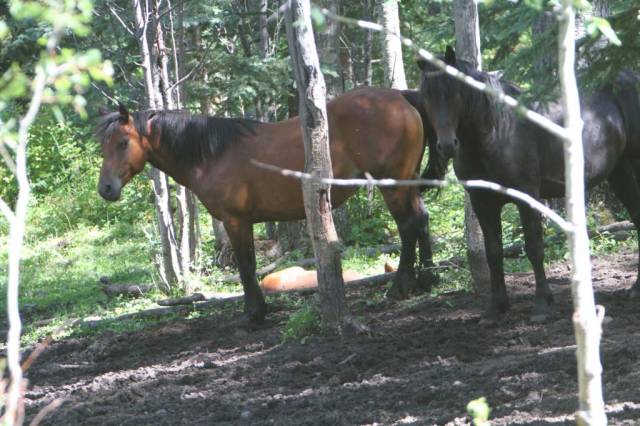
Another thing about this time of year is that the biting insects can become quite a problem for the horses. To relieve themselves they seek out areas in the trees that has bare ground. This gives them some relief from the insects and from the heat of the day. We call this treeing up.
We will continue with our citizen science in order to present our observations to you as we see them.
 Alberta Mountain Horse