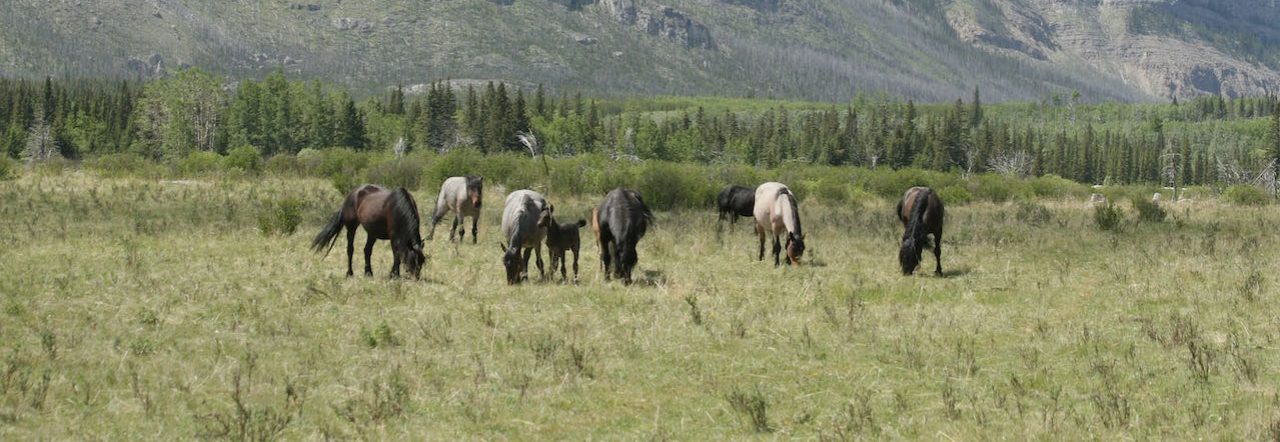
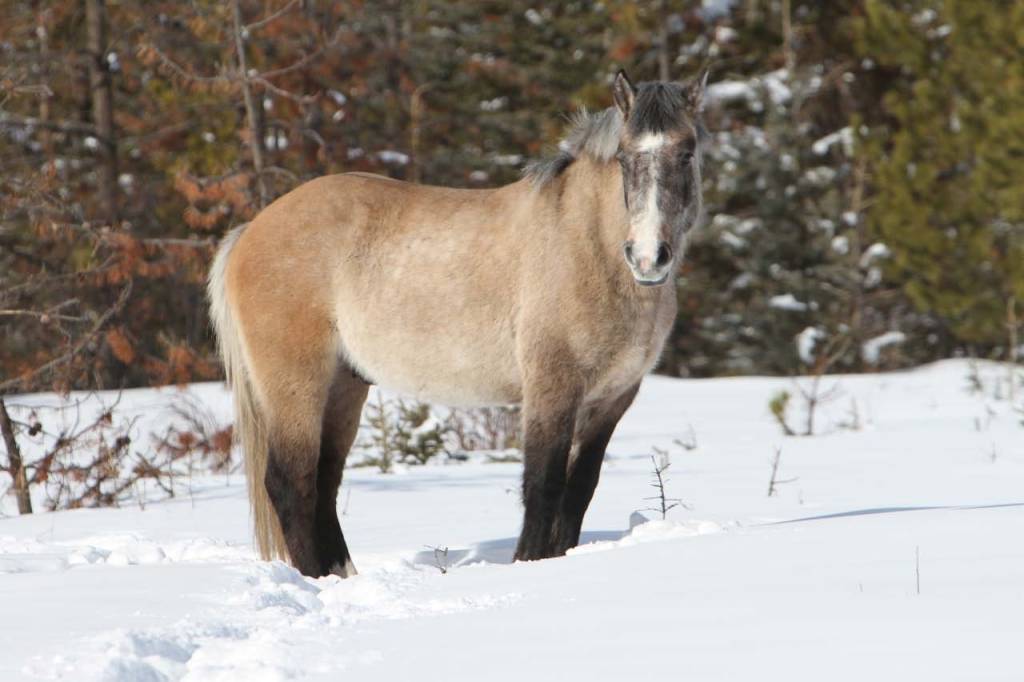
Recently the Feral Horse Advisory Committee (FHAC) was emailed regarding the minister’s public announcement about the next steps in implementing the feral horse management framework. This includes the removal of 30 horses from EMZs in the “red zone located along the Eastern slopes and the contraception of up to 90 more horses in those same areas. In this message, the writer indicates that the committee made a compromise of recognizing feral (wild)horses on the landscape with a “green” level of 1119 horses as an acceptable level of feral horses on the landscape.
We feel it is imperative that the government provide specific information as to where the horse population limit of 1119 comes from, and where the scientific evidence is that would back that number. Especially since published scientific studies are already in place – The McCrory Report and the de Kock Report – both of which have been presented to the government – that indicate that the horses are not the reason for ecological damage to the west country.
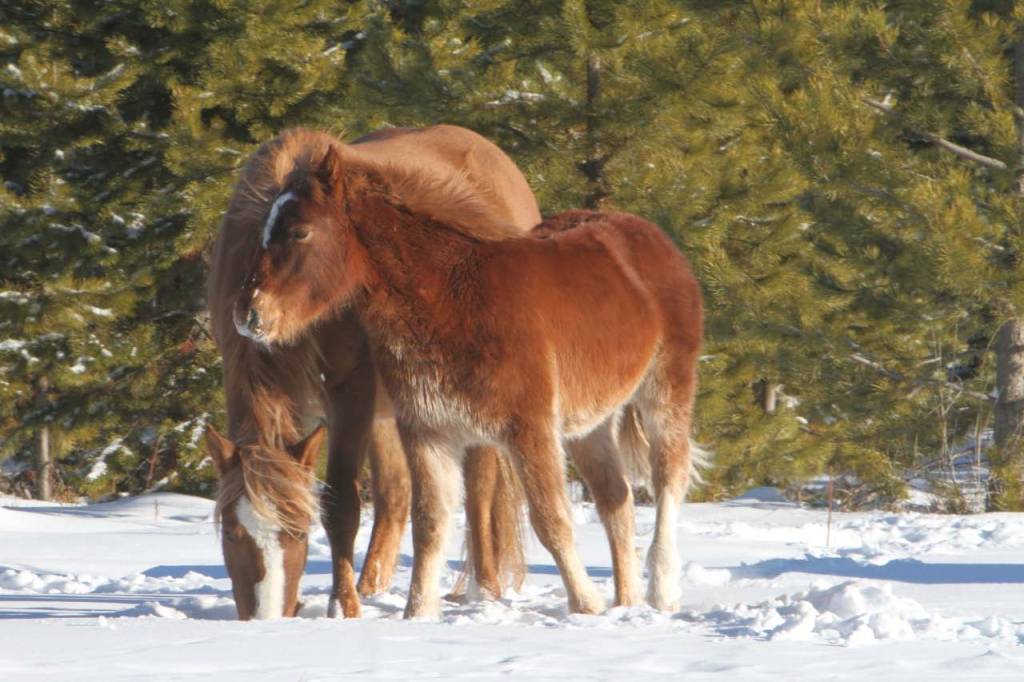
According to the last government Equine Area (EA) counts in the spring of 2024 and the same government department’s predetermined maximums thresholds per EA, they should only be removing 17 horses. 6 from the Clearwater EMZ and 11 from the Elbow EMZ as those two areas are the only areas in which the level 2 threshold has been exceeded. However and in reality – since the horses are a nomadic species, who easily travel from one zone to another, multiple times in any given week or month, the government cannot in all good faith, realistically use broken out numbers per each EA to determine removal. If the government cannot provide indisputable, scientific evidence indicating the entirety of the 6 equine zones can only ecologically handle the combined Threshold 2 number of 1760 horses, then there should be no removal or management. Currently, there is a total count of 1478 horses between all 6 EMZs, which is well below the stated Threshold 2 level.
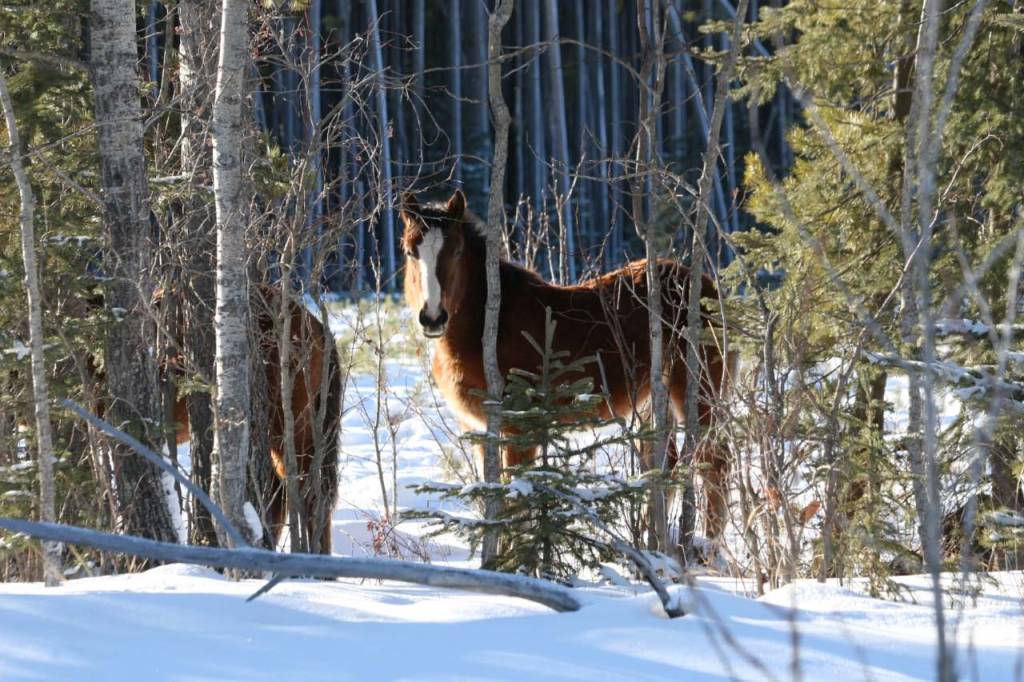
In addition, we would like to know – Who is going to capture these 30 horses and from where will they be removed? Where are they going once captured? Our understanding is that WHOAS is already at capacity and having trouble adopting out the horses already on site. They also do not, to the best of our knowledge, currently have anyone with both the capability and the experience required to capture wild horses, nor do they have any full time qualified people on site who are physically capable and knowledgeable of properly handling these horses. So in our opinion, that is no longer a viable solution for any captured horses.
Who is going to administer the contraception to the proposed 90 mares? In what area(s) will they be administering the contraception and which contraceptive product are they proposing to use?
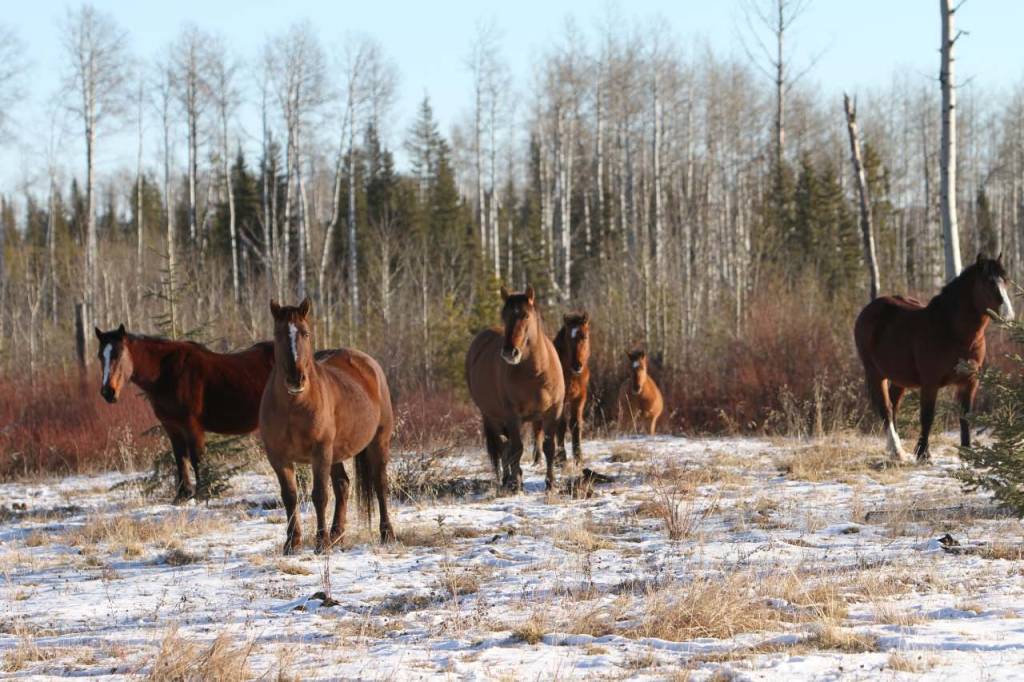
Furthermore – The gov’t counts are indicating that the Clearwater EMZ increased from 97 horses in 2023 to 156 horses in 2024. That’s an increase of 59 horses in one year. Clearly the majority of these horses have migrated from the Sundre Equine zone to the Clearwater zone, since coincidentally, the Sundre EMZ is down by 130 from last year’s numbers. At least these were where the horses were during last year’s count. Otherwise it’s fair to say we are talking about a zero mortality rate for the Clearwater zone and a survived reproductive rate of 61% of the previous year’s population! Unheard of!! In addition, according to the last counts, the Elbow EMZ has apparently had a zero mortality rate and a surviving reproductive rate of 33% in order to have jumped from 84 horses in 2023 to 111 horses in 2024! Also – unheard of!! There’s something fishy in River City is all I’m sayin…….. So – according to the government counts, and assuming horses respect invisible EMZ boundaries (!) I guess 130 horses died in the Sundre EMZ and no foals were born or survived?
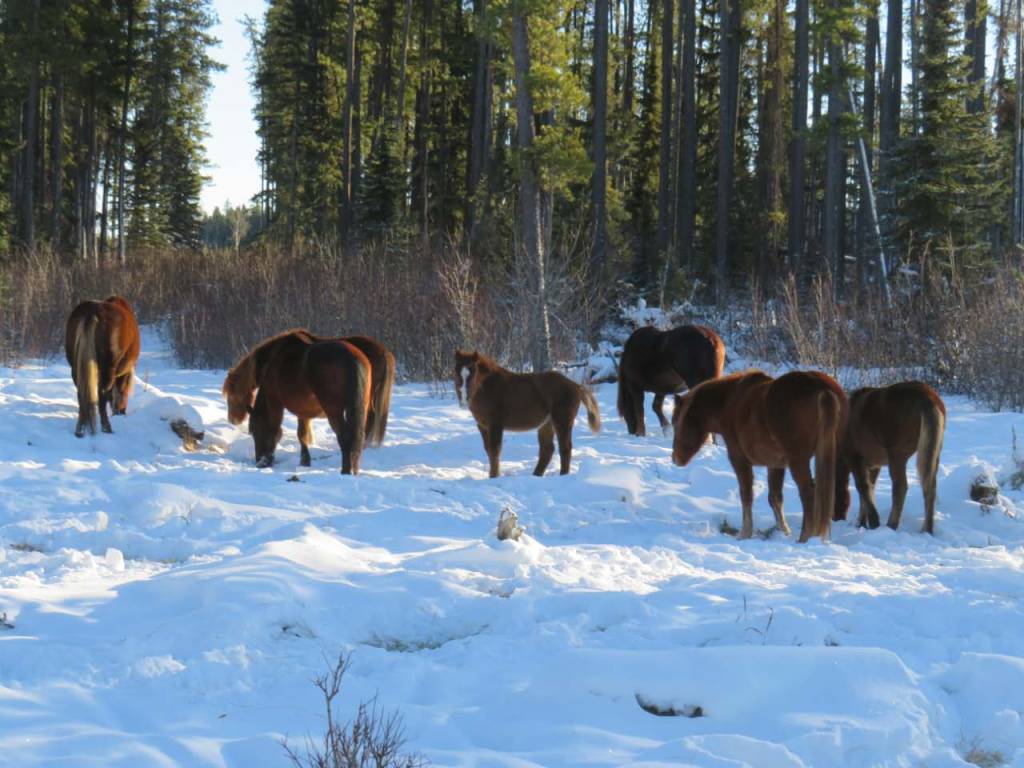
Let’s recap. The total count of horses in 2023, for all 6 zones, was 1512. The total count in 2024 for only 4 zones, was 1478. If we include the 2023 counts for the other two zones for 2024, the total would have been 1529 for all 6 zones in 2024. Even with these ridiculous counts, that represents only an increase of 16 horses. In 6 zones. And the maximum number of horses in all 6 EMZ’s according to the government’s “Threshold 2” numbers is 1760. So we are still well below Threshold 2, which by the way – has yet to be scientifically proven as a legitimate ecological “threshold”.
(We will note, the only zone we could remove from the cumulative total counts for the 6 zones would be Elbow as there is no easy way for wild horses to migrate between other zones to or from the Elbow EMZ.)
Because these numbers just smelled wrong on a scientific level, we decided to do some “counting” of our own! If we calculated the expected horse population change from 2023 to 2024 – based on scientific information from the McCrory and the de Kock reports, the following can be assumed:
- Adult survival rates are roughly 75 – 80%
- Reproductive rates are roughly 50-70%
- Foal survival rates are roughly 10 -30% in harsh environments, 30 – 50% in less harsh environments.
So let’s do the math! In 2024, 1478 horses were counted, 166 of which were subadults. This represents about 12% of the total population. Using those same numbers and applying the percentage of subadults to total horses counted, we could assume in 2023 that:
- Of the 1512 adult and subadult horses counted, only 80% (on the high end) would have survived to 2024. That equals 1210 horses.
- Of those horses, it’s fair to say that 12% are sub adults, which brings our mature horse count to roughly 1065.
- Of those mature horses, let’s say 60% of them are mares. That’s 639 mares of breeding age. Using a high rate of 70% of those mares successfully reproducing, we would have 447 foals on the ground in the spring.
- Of those 447 foals, the survival rate is on average 30%, between the more harsh and less harsh environments. That means roughly 224 foals survive. Which brings our total count to 1210 mature and subadult horses plus the 224 surviving foals.
This all calculates out to about 1434 horses in all 6 EMZ’s in 2024 vs 1512 in 2023.
We are not saying our numbers are spot on – but it makes a person think, doesn’t it? Obviously, there are environmental changes from year to year that affect survival rates that might make a population surge and dwindle, but all of that happens mostly through nature without interference from government , etc. In fact, the more interference there is, the more screwed up the balance of nature becomes and the more issues are created.
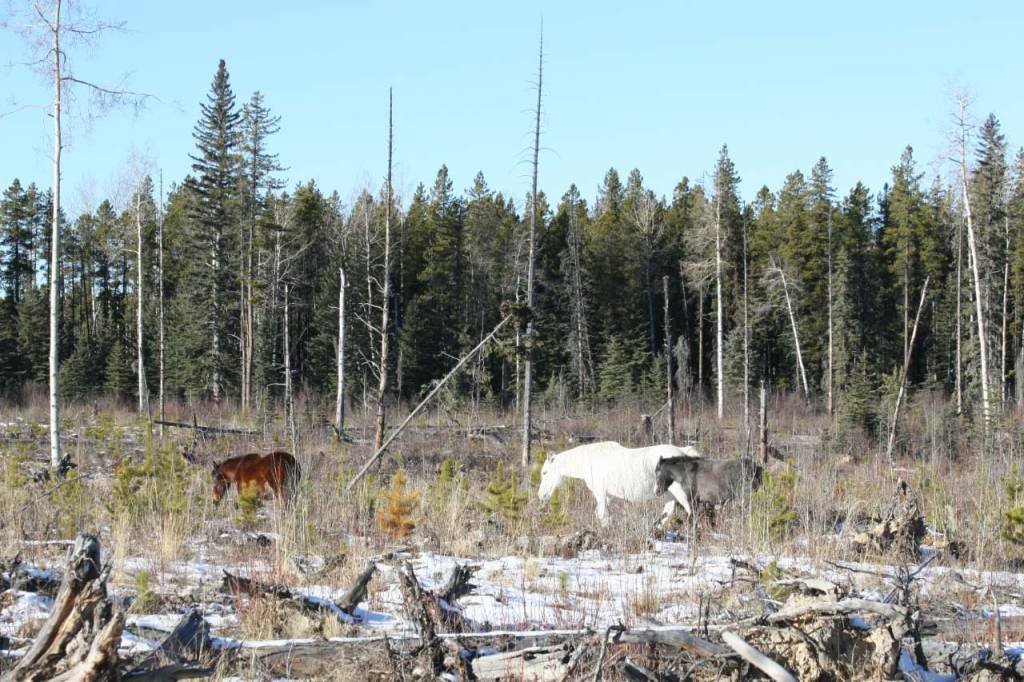
So what can you do?
Please help our Alberta Mountain Horses!
Please send your concerns and questions to the Minister:
Todd Loewen, Hon., MLA
Minister of Forestry and Parks
Office of the Minister
Forestry and Parks
323 Legislature Building
10800 – 97 Ave
Edmonton, AB T5K2B6
email: fp.minister@gov.ab.ca
Also, forward you questions to the Premier:
Danielle Smith, Premier
307 Legislature Building
10800 – 97 Ave
Edmonton, AB T5K 2B6
email: premier@gov.ab.ca
 Alberta Mountain Horse
I have been emailing the premier and Minister Loewen for the past week or so and have received zero responses! However, I am continuing to write almost every day. Thank you for your clear summary of what is happening.
ejoan.williams@gmail.com
LikeLike